
Hiring Software Developers in Mexico:Talent & Hiring Models

TL;DR :-
Explore why companies hire software developers in Mexico, including nearshore benefits, talent availability, and faster engineering delivery cycles.
Compare Mexico with India, Vietnam, the Philippines, Poland, and Ukraine to understand cost, skills, and collaboration advantages.
Learn about hiring models, developer costs, key tech hubs, and strategies to build scalable engineering teams.
Finding experienced developers in the U.S. has become expensive and slow. Projects stall while hiring pipelines stretch for months.
Many CTOs now look beyond local markets to scale engineering faster without compromising quality. Mexico has emerged as a powerful nearshore destination offering skilled talent, timezone alignment, and predictable collaboration.
Companies seeking faster releases and reduced hiring friction increasingly evaluate Mexico as a strategic hiring location rather than a simple outsourcing option.
Understanding how hiring works, what it costs, and where skilled developers are based helps businesses make confident expansion decisions.
Why Hiring Software Developers in Mexico Is Growing Rapidly
Global companies are rethinking traditional outsourcing strategies. Mexico’s rise is closely tied to modern distributed engineering models and the growing demand for real-time collaboration across product teams.
Mexico’s technology ecosystem has expanded rapidly over the past decade. Over 700,000 technology professionals now work across software engineering, cloud infrastructure, DevOps, and AI development.
Nearshoring drives this growth. U.S. companies prefer teams working in overlapping time zones instead of overnight offshore collaboration cycles.
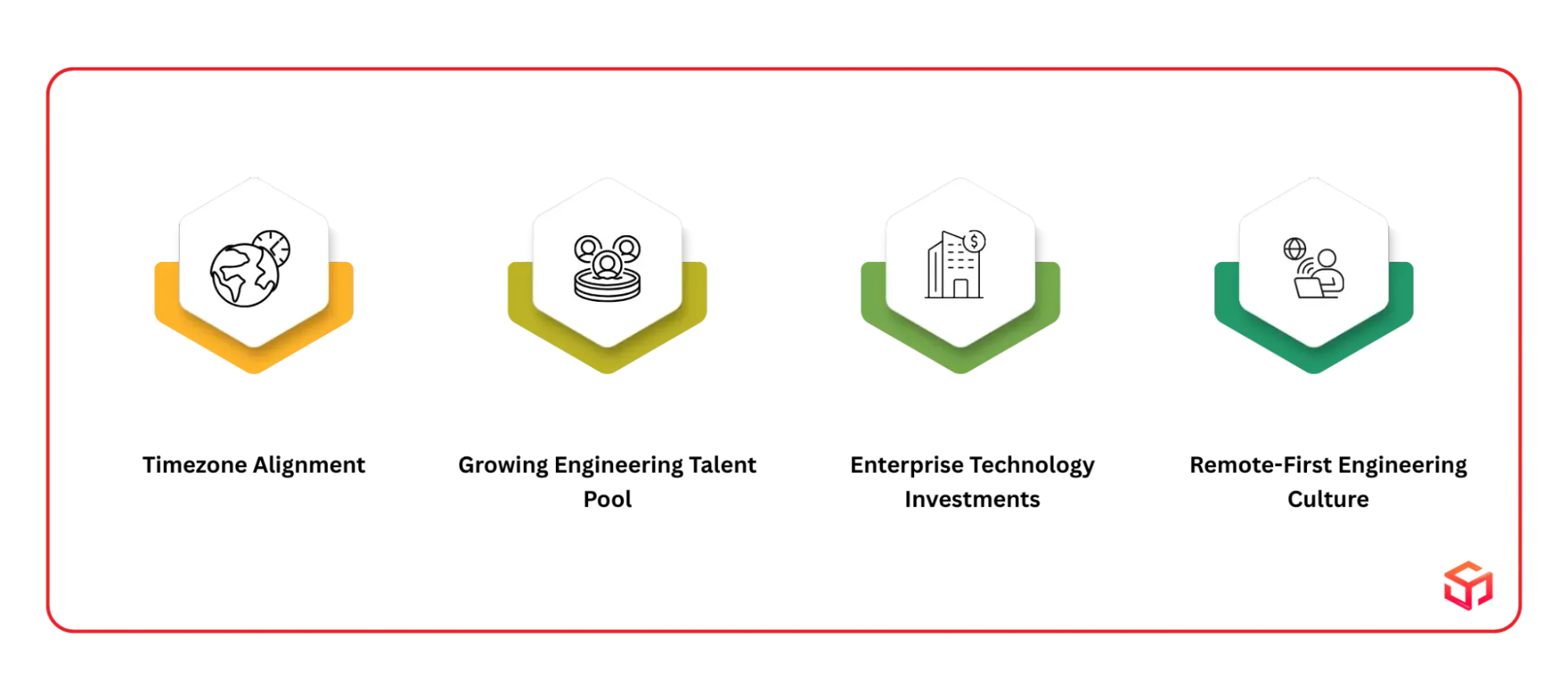
Key factors accelerating adoption include:
Timezone AlignmentTeams collaborate during standard working hours, improving sprint planning, standups, and deployment cycles. Real-time communication significantly reduces delays caused by asynchronous development workflows.
Growing Engineering Talent PoolMexican universities produce over 120,000 engineering graduates annually, strengthening long-term talent availability across backend development, mobile engineering, and enterprise system modernization projects.
Enterprise Technology InvestmentsMajor global companies continue investing heavily in Mexico’s digital ecosystem, validating the country as a mature engineering hub rather than an emerging outsourcing destination.
Remote-First Engineering CultureDevelopers in Mexico adapted quickly to distributed work environments, enabling seamless integration with agile product teams operating across North America.
Mexico Vs Other Outsourcing Destinations
Companies rarely evaluate one country in isolation. Leadership teams compare multiple outsourcing regions to balance cost efficiency, collaboration quality, and long-term scalability before selecting the right engineering destination.
Mexico stands out for real-time collaboration and seamless agile integration. Its nearshore advantage allows U.S. companies to operate within overlapping time zones, accelerating sprint cycles and release velocity.
India continues to lead global outsourcing with unmatched scalability. Its massive engineering workforce and deep specialization make it ideal for enterprise-grade product development and long-term digital transformation initiatives.
Vietnam remains attractive for cost-sensitive startups. Organizations looking to hire developers in Vietnam often prioritize lower hourly rates and lean operational budgets over real-time collaboration.
The Philippines is known for strong English proficiency and communication-driven roles. It performs well in QA, web development, and support-focused engineering environments.
Poland delivers high-end European engineering quality. It suits companies building complex enterprise systems, cybersecurity platforms, or regulated fintech solutions, though at higher cost levels.
Ukraine has built a strong reputation in product engineering and system architecture. It is often selected by SaaS companies requiring advanced backend expertise and scalable platform design.
Companies aiming for enterprise-scale delivery should hire software developers in India to access deep technical expertise, scalable teams, and mature outsourcing ecosystems built for long-term growth.
Not Sure Before Hiring Developers?
Skip uncertainty and validate talent first. Our 40-hour free trial lets you assess coding quality, communication style, and productivity before making any long-term hiring decision.
Test TalentCost of Hiring Software Developers in Mexico
Understanding developer costs helps companies plan engineering budgets and hiring strategies effectively. Pricing varies based on expertise level, technology stack, project complexity, and chosen hiring engagement model.
The cost of hiring software developers in Mexico typically starts from $25 per hour. Rates increase depending on seniority, niche technical skills, and enterprise-level project requirements.
Mexico offers a balanced cost-to-quality ratio. Companies gain access to skilled engineers while maintaining strong collaboration benefits through nearshore delivery models and real-time development workflows.
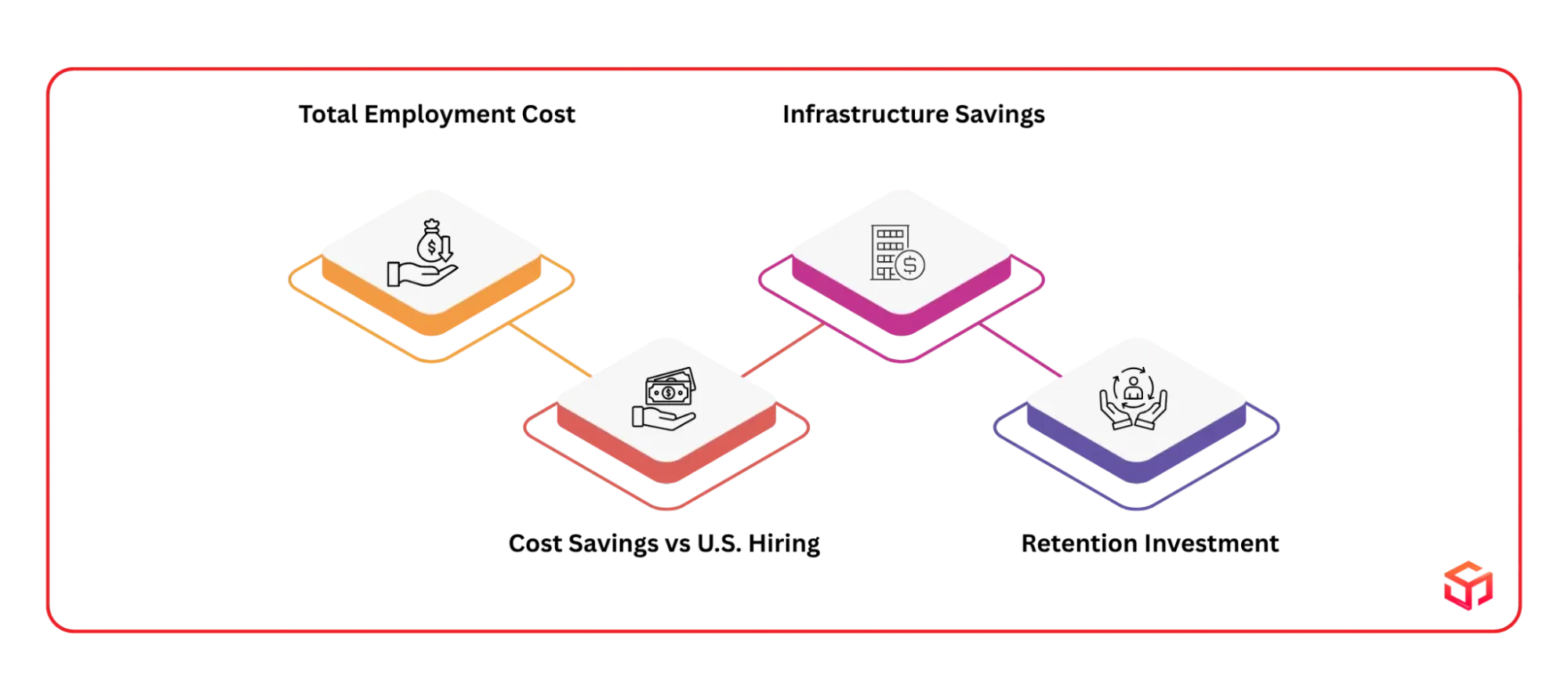
Important cost considerations:
Total Employment CostCompanies must account for benefits, payroll taxes, compliance obligations, and administrative overhead, which typically add 30–40% beyond base salary.
Cost Savings vs U.S. HiringOrganizations reduce hiring expenses by 40–60% while maintaining strong engineering standards and modern technology expertise.
Infrastructure SavingsDistributed teams reduce office expenses, hardware provisioning, and operational overhead while maintaining agile delivery velocity.
Retention InvestmentCompetitive compensation remains essential since demand for experienced engineers continues growing across Mexico’s major tech cities.
Top Tech Cities to Hire Software Developers in Mexico
Engineering talent in Mexico is found in specific areas known for innovation. Choosing the right city directly impacts hiring speed, technical specialization availability, and long-term scalability for distributed development teams.
Guadalajara – Silicon Valley of Mexico
Guadalajara stands as Mexico’s most recognized innovation hub, combining startup energy with enterprise engineering expertise. Its ecosystem continues attracting global technology companies and skilled software professionals.
Guadalajara hosts strong expertise in SaaS platforms, embedded systems, and cloud-native application development.
Key advantages:
Strong university pipeline producing highly skilled engineers
Mature startup ecosystem supporting innovation
The presence of multinational R&D centers is accelerating knowledge transfer
Companies seeking agile product development teams often begin hiring in Guadalajara due to its strong developer community.
Mexico City – Largest Tech Talent Market
Mexico City offers the country’s largest and most diverse engineering workforce, making it ideal for organizations planning rapid team expansion or enterprise-scale delivery operations.
The city supports fintech platforms, AI initiatives, and enterprise modernization projects.
Benefits include:
Massive talent availability across multiple technology stacks
Strong bilingual communication capabilities
Access to senior engineers with enterprise system experience
Large product companies prefer Mexico City when building cross-functional engineering teams quickly.
Monterrey – Emerging Engineering Hub
Monterrey combines strong engineering education with industrial innovation, creating a rapidly growing technology workforce attractive to global development organizations.
The city excels in manufacturing software, automation systems, and enterprise backend development.
Why Monterrey matters:
High-quality engineering universities
Increasing startup investments
Strong DevOps and systems engineering talent growth
Monterrey increasingly supports companies expanding distributed engineering operations across Mexico.
Struggling To Scale Your Dev Team Fast?
Hiring delays slow product releases and increase costs. Soft Suave provides pre-vetted developers ready to integrate instantly.
Hire ExpertsPopular Technologies Used by Mexican Developers
Modern development teams require expertise across evolving technology stacks. Mexican engineers actively work with current frameworks, cloud platforms, and DevOps methodologies powering today’s digital products.
Common tech stack Mexico developers specialize in:
Frontend DevelopmentReact, Angular, and Vue dominate UI engineering projects, enabling scalable user interfaces optimized for performance and responsive experiences.
Backend EngineeringNode.js, Python, Java, and .NET remain widely adopted for building APIs, enterprise applications, and microservices architectures.
Cloud & DevOpsEngineers commonly deploy solutions using AWS, Azure, Kubernetes, and CI/CD pipelines supporting automated infrastructure management and scalable deployments.
Mobile DevelopmentAndroid and iOS specialists build cross-platform applications using Flutter, React Native, and native frameworks.
Ways to Hire Software Developers in Mexico
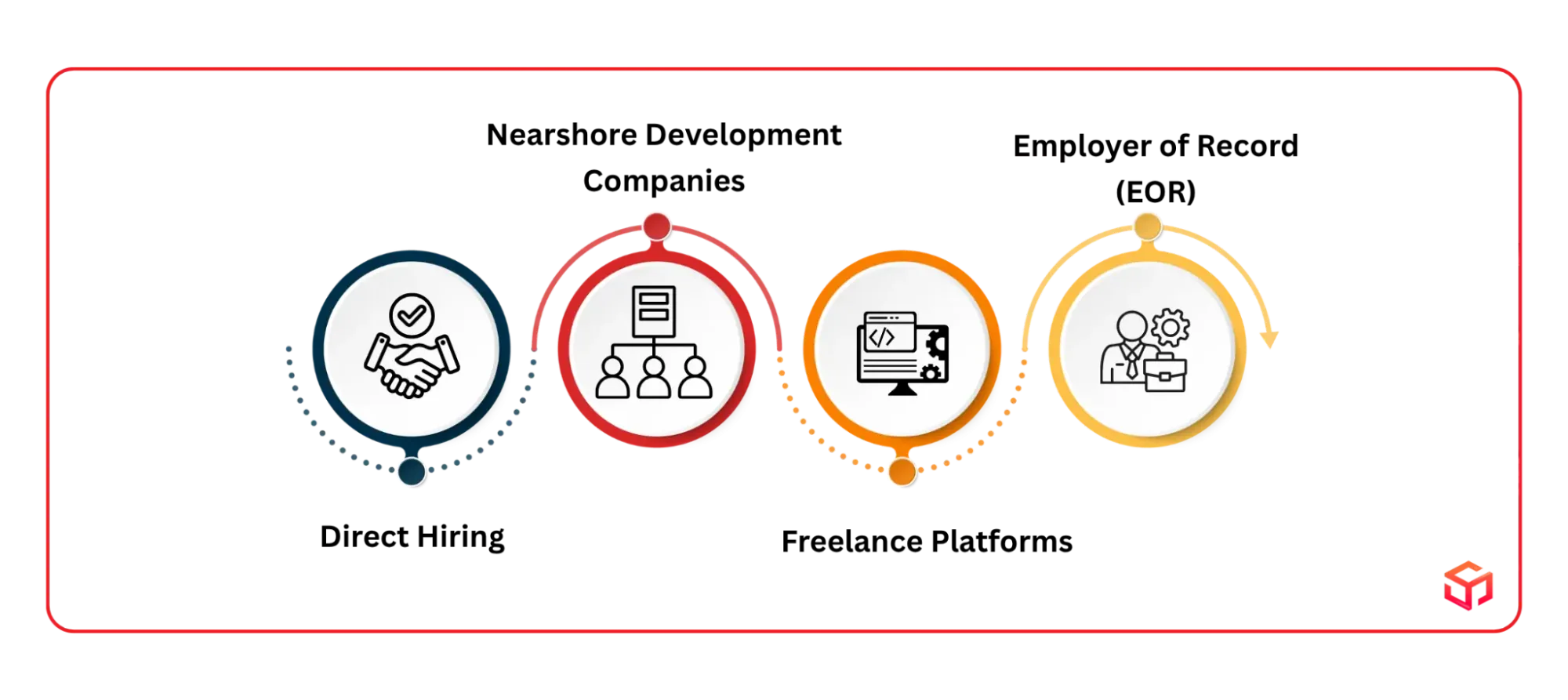
Organizations can access Mexican talent through multiple engagement models. Selecting the right hiring approach determines scalability, compliance risk, and operational control over distributed engineering teams.
Direct Hiring
Direct hiring provides full control over engineering teams but requires local legal setup and HR infrastructure.
Companies must manage payroll, taxation, and employment regulations independently. Best suited for organizations planning a long-term presence in Mexico.
Nearshore Development Companies
Nearshore partners provide pre-vetted teams ready to integrate into agile workflows quickly. Companies benefit from faster onboarding and reduced administrative complexity.
This model works well, but you need to know when to choose outsourced teams over internal hiring, particularly during rapid product scaling phases.
Teams gained through partners often accelerate delivery without internal recruitment delays.
Freelance Platforms
Freelancers offer flexibility for short-term projects or specialized tasks. However, managing quality, availability, and long-term continuity can become challenging for large-scale development initiatives.
Best for experimentation rather than core product engineering.
Employer of Record (EOR)
EOR providers legally employ developers on behalf of foreign companies. This model simplifies compliance while allowing organizations to manage developers directly.
Advantages include faster international hiring and simplified payroll operations.
Advantages of Hiring Software Developers in Mexico
Mexico delivers strong strategic advantages beyond simple cost savings. Companies increasingly view nearshore teams as extensions of internal engineering departments rather than outsourced vendors.
Key advantages of hiring developers in Mexico include:
Real-Time CollaborationShared working hours improve agile ceremonies, sprint reviews, and production troubleshooting without scheduling delays across distant time zones.
Cultural CompatibilityMexican engineers integrate smoothly into the North American work culture, improving communication clarity and reducing onboarding friction.
High English ProficiencyMany developers possess strong English communication skills, enabling effective technical discussions and architectural decision-making.
Skilled STEM WorkforceUniversities produce graduates trained in modern programming languages, distributed systems, and cloud computing technologies.
Faster Hiring CyclesNearshore access reduces recruitment timelines compared to competitive U.S. markets experiencing persistent developer shortages.
Need Developers Ready From Day One?
Access engineers skilled in modern frameworks, cloud platforms, and agile workflows. Soft Suave enables seamless onboarding, faster sprint execution, and reliable product releases without operational friction.
Start NowDisadvantages of Hiring Software Developers in Mexico
Every hiring destination presents trade-offs. Understanding potential limitations helps organizations plan mitigation strategies before expanding engineering operations internationally.
Common disadvantages include:
Higher Costs Than Offshore RegionsMexico remains more expensive than Asian outsourcing destinations, especially for senior engineers specializing in AI or cloud architecture.
Talent CompetitionGrowing demand from U.S. companies increases competition for experienced developers within major cities.
Regional Salary VariationCompensation differs significantly across cities, requiring localized hiring strategies.
Limited Talent Depth in Smaller CitiesSmaller markets may lack the specialized expertise needed for highly complex enterprise systems.
Tips for Successfully Hiring Software Developers in Mexico
Successful hiring depends on strategy rather than geography alone. Companies achieving strong outcomes follow structured processes, aligning hiring models with long-term engineering objectives.
Define Hiring Goals FirstIdentify whether the objective is team augmentation, product development, or dedicated engineering expansion before selecting engagement models.
Standardize Technical VettingUse structured coding assessments, system design interviews, and architecture reviews to maintain engineering quality across distributed teams.
Choose the Right Hiring ModelEvaluating the best hiring models early helps organizations avoid costly restructuring later.
Invest in Communication PracticesDaily standups, shared documentation, and asynchronous collaboration tools improve productivity across global engineering teams.
Plan Long-Term RetentionCompetitive salaries, growth opportunities, and an inclusive culture significantly reduce turnover risks.
Conclusion
Hiring decisions today define how fast products evolve tomorrow. Mexico offers a powerful blend of skilled engineers, cultural compatibility, and real-time collaboration advantages.
Companies gain speed without sacrificing engineering quality. Yet the smartest organizations treat Mexico as one piece of a global hiring strategy rather than a standalone solution.
Align hiring models with product goals, choose locations strategically, and invest in strong engineering leadership.
Businesses that build distributed teams intentionally unlock faster releases, stronger innovation cycles, and sustainable scaling momentum across competitive technology markets.
Frequently Asked Questions
How much does it cost to hire a software developer in Mexico?
Hiring costs in Mexico typically start from $25 per hour, depending on developer expertise, technology specialization, and engagement model. Rates increase for senior engineers, niche technologies, or enterprise-scale development requirements.
Is Mexico good for nearshore software development?
Yes. Mexico offers strong timezone alignment with North America, cultural compatibility, and a growing engineering workforce, making it one of the most popular nearshore destinations for agile product development teams.
Where can companies hire developers in Mexico?
Major hiring hubs include Guadalajara, Mexico City, and Monterrey. These cities provide strong university pipelines, established tech ecosystems, and access to developers experienced in cloud, mobile, and enterprise software development.
Is Mexico popular for nearshore software development?
Mexico has become one of the fastest-growing nearshore markets due to collaboration advantages, increasing enterprise investments, and the rising demand for distributed engineering teams supporting North American businesses.
Can companies hire remote software developers in Mexico?
Yes. Companies can hire remotely using direct employment, nearshore partners, freelance platforms, or Employer of Record services that manage compliance, payroll, and local employment requirements efficiently.
Is hiring software developers in Mexico cheaper than in India?
Mexico is generally more expensive than India, but it offers better timezone alignment for U.S. companies. India remains more cost-effective for large-scale development requiring massive talent availability and 24/7 delivery models.
Is Mexico a good place to hire software developers?
Yes. Mexico combines strong technical talent, modern development expertise, cultural alignment, and nearshore collaboration advantages, making it an excellent choice for companies seeking faster product delivery and distributed engineering scalability.

Ramesh Vayavuru is the Founder & CEO of Soft Suave Technologies, with 15+ years of experience delivering innovative IT solutions.
Related Blogs