Soft Suave - Live Chat 


💬 Hi there! Need help?
 1
1
Soft Suave - Live Chat
1

We combine AI-enabled engineering with 13+ years of product development expertise to help clients build scalable AI solutions, automate complex workflows, and integrate systems for measurable business outcomes.



















Frontend developers build and maintain the user-facing parts of websites and web applications. Their work includes creating interfaces, developing reusable components, integrating APIs, supporting responsive experiences, and improving frontend performance.
You should hire a frontend developer when your team needs additional delivery capacity, specialized framework knowledge, help modernizing an existing interface, or continued support for a growing product. The developer can work independently or collaborate with designers, backend engineers, QA specialists, and product managers.
Soft Suave provides front end developers for hire across React, Angular, Vue.js, Next.js, JavaScript, and TypeScript requirements. Developers join your existing tools and processes, including source control, sprint planning, code review, testing, documentation, and deployment workflows.
Our developer rates start at $14 per hour and vary by skill, experience, engagement model, and project requirements.
Hire frontend developers from Soft Suave to work across the frontend layer, from building new interfaces and modernizing existing applications to integrating APIs, improving performance, and maintaining test coverage.
Develop user-facing interfaces for SaaS products, dashboards, portals, ecommerce platforms, internal systems, and other web applications using reusable components and established frontend architecture.
Convert approved designs into responsive interfaces while maintaining visual consistency, reusable patterns, accessibility considerations, browser compatibility, and alignment with the intended user journey.
Create and maintain reusable component libraries that support consistent behavior across screens, reduce duplicated implementation, and make future interface changes easier to manage.
Connect frontend applications with REST and GraphQL APIs, authentication services, backend workflows, and third-party platforms while managing loading states, errors, permissions, and application data.
Replace outdated interface patterns, migrate legacy code incrementally, introduce modern frameworks, improve component structure, and add testing without unnecessarily rebuilding the entire application.
Improve rendering, bundle size, responsive behavior, Core Web Vitals, and browser compatibility while using tools such as Jest, Cypress, or Playwright to protect important workflows.
Choose frontend developers with experience in your product’s technology stack, so they can contribute to your codebase without an extended ramp-up period.

Support component-based applications, interactive product interfaces, reusable UI systems, state management, API-driven features, testing, maintenance, and React modernization across new or existing products.

Add Angular expertise for enterprise applications, dashboards, portals, structured workflows, TypeScript development, RxJS-based interactions, component architecture, automated testing, and long-term interface maintenance.

Build or maintain Vue.js interfaces with reusable components, reactive state, API integration, routing, performance improvements, and incremental adoption within an existing web application.

Support React applications requiring server-side rendering, static generation, structured routing, performance optimization, API integration, reusable components, and maintainable frontend architecture with Next.js.

SAdd JavaScript expertise for interactive interfaces, browser behavior, third-party integrations, legacy application maintenance, component logic, debugging, testing, and improvements to existing frontend code.

Use TypeScript for clearer interfaces, reusable types, safer refactoring, framework development, API contracts, component libraries, testing, and maintainable frontend work across larger applications.
The right framework is only one part of the decision. Product type, existing architecture, user workflows, testing expectations, performance requirements, and team structure should also guide developer matching.
| Product Need | Suitable Frontend Skills | What to Evaluate |
|---|---|---|
| SaaS product interface | React, Next.js, TypeScript, state management | Component structure and maintainability |
| Enterprise dashboard | Angular, TypeScript, data visualization | Complex state and workflow handling |
| Customer portal | React or Vue.js, API integration | Authentication and responsive behavior |
| Ecommerce interface | React, Next.js, performance optimization | Product discovery, checkout and Core Web Vitals |
| Legacy modernization | Modern frameworks, testing, migration planning | Incremental migration and regression control |
| Design-system implementation | Component libraries and accessibility | Consistency, documentation and reusable patterns |
Your matched developer should understand both the technology and the work around it. That may include collaborating with designers, consuming backend APIs, reviewing existing code, following release processes, and maintaining functionality while the interface evolves.
Select an engagement structure based on how clearly the work is defined, how often requirements change, and whether you need one specialist or broader team support.

For continuing work, hire dedicated frontend developers you manage directly within your existing product team.
Hire Now
For evolving requirements, with effort reviewed, reprioritized, and adjusted during each development cycle as needed.
Hire Now
For defined work with confirmed scope, deliverables, timelines, dependencies, and clear acceptance criteria agreed upfront.
Hire NowUse the 40-hour risk-free trial to review code structure, component design, UI accuracy, responsive behavior, API integration, testing discipline, communication, requirement understanding, and how well the developer works within your existing process.
Get a frontend developer matched to your technical requirements, product needs, and existing team structure in just 4 simple steps.
Share the frontend job description, responsibilities, experience, and product context needed to hire a frontend developer.
Review matched profiles based on your stack, project needs, experience, availability, and team fit.
Interview shortlisted developers and assess practical work through the 40-hour trial.
Onboard your selected developer, assign priorities, and manage delivery within your existing workflow.
Your developer should bring the required technical skills while working effectively with your product, design, backend, and QA teams. Soft Suave supports that fit through practical evaluation and flexible engagement.

Evaluate frontend execution, communication, requirement understanding, and team compatibility before making a longer-term commitment.
Access broader engineering expertise when frontend delivery requires support across connected technical disciplines.
Work with an experienced engineering partner across development, modernization, maintenance, and changing technical requirements.
Soft Suave maintains a certified information security management system across software development and delivery activities.
Collaborate directly with your developer on priorities, decisions, reviews, blockers, and progress.
Choose dedicated, time-and-material, or fixed-bid support based on scope, capacity, priorities, and workload.
Soft Suave has a delivery presence across Chennai, Bengaluru, and the United States. This structure supports collaboration across locations while keeping developers connected with your product goals, technical standards, communication tools, and established delivery routines.
Onboarding begins with access to your repositories, design files, ticketing system, and documentation. The developer joins your existing standups and review cycles from the start, so the working relationship is established before delivery expectations increase.
From there, work with frontend developers in India is coordinated through agreed meetings, sprint reviews, written updates, code reviews, and shared project-management systems. The working arrangement is defined around your team's collaboration needs and the responsibilities assigned to the developer.
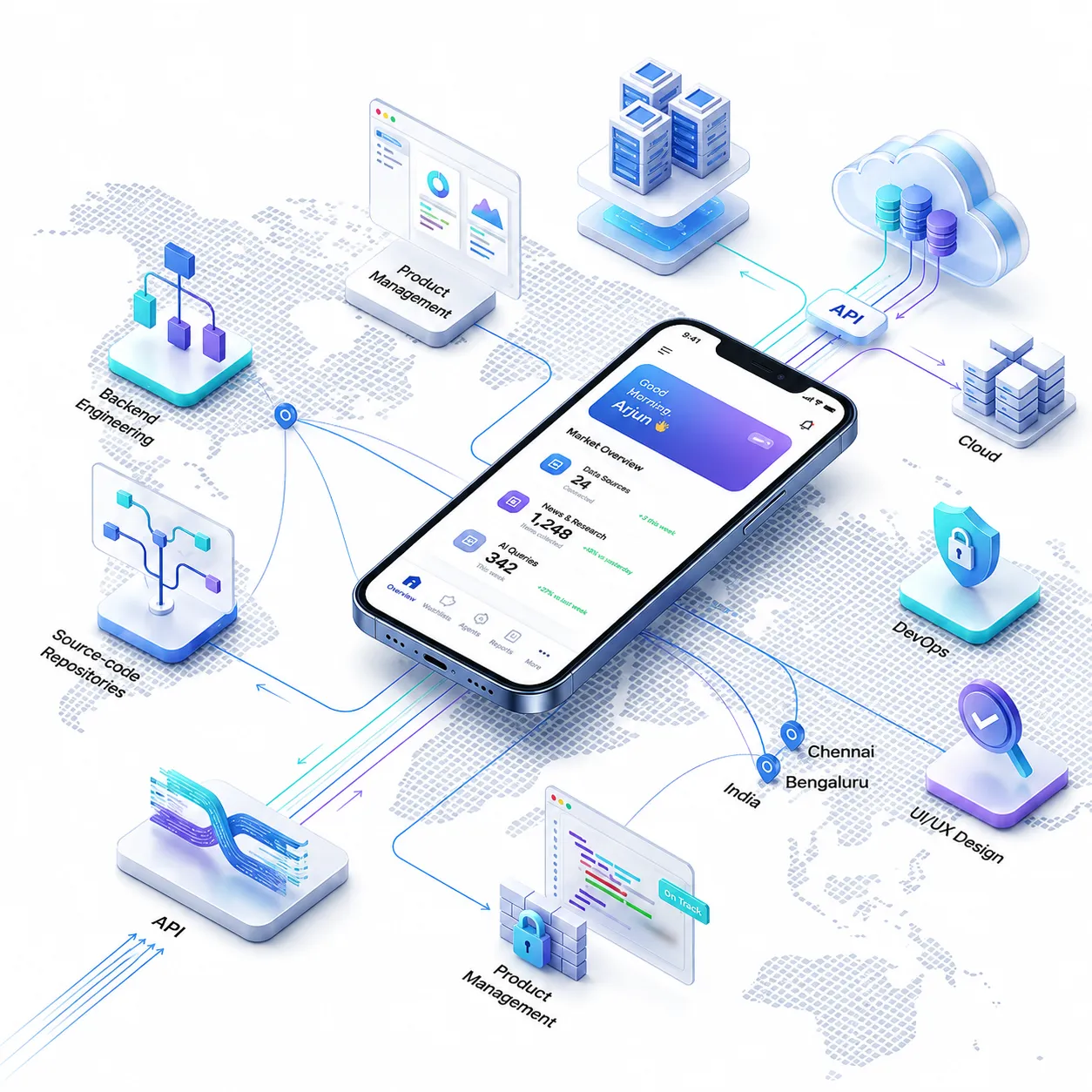
Our frontend developers work across languages, frameworks, APIs, testing platforms, and build tools. Add frontend expertise aligned with your current technology stack, helping your team maintain development continuity from the first working day.
We've empowered hundreds of clients globally to achieve their business goals. Hear firsthand how our expertise and AI-driven solutions have made a difference.

"Soft Suave's commitment to meeting deadlines, flexibility in working hours, and ability to seamlessly integrate with our U.S. team make them a reliable and invaluable technology partner."
Tim Maliyil
Chief Operating Officer - Phoenix Technologies


"Their 40-hour free trial isn't just a marketing promise-it's a genuine opportunity to experience top-notch developer skills. I was beyond impressed with what they delivered during the trial period!"
Dara Huang MD
Co-Founder - Perkypet

"I have been working with Soft Suave for past 3 years and the experience was quite unique. Soft Suave helped us overcome the barriers that we had from software development point of view. Partnering with Soft Suave reduced our costs by 40% and increased our delivery speed by 20%."
Dimitris Rokos
Founder, CEO - AMD telecom

"I've been asking Soft Suave to help me develop a mobile app. The team is available right from the start. They're nice guys to work with and highly recommend them. Thanks."
Roland White

"Soft Suave provides amazing service. I am completely satisfied with the projects and look forward to continuing my relationship. I will also recommend their services without question."
Aaron. G
Find clear answers to common questions about hiring frontend developers from Soft Suave.
A frontend developer builds and maintains the user-facing layer of a website or web application. The work can include components, responsive layouts, state management, API integration, accessibility, browser compatibility, testing, performance improvement, debugging, and continued interface development.
You should hire frontend developer support when your team lacks capacity or needs specialized interface expertise. Common situations include new product development, feature backlogs, framework migration, design-system implementation, performance work, maintenance, and additional support for an existing engineering team.
The right framework depends on your product, existing architecture, team knowledge, performance needs, and maintenance plans. React and Next.js suit many component-based products, Angular supports structured enterprise applications, and Vue.js can support progressive adoption and lightweight interface development.
The trial covers practical frontend work within an agreed scope. You can assess technical execution, code quality, communication, requirement understanding, responsiveness, and compatibility with your team.
Our frontend developers provide 4–6 hours of working-time overlap for global clients. When you hire frontend developer support, collaboration includes standups, handovers, agreed review points, and asynchronous communication.
You can evaluate a frontend developer through an interview, relevant code discussion, and practical work. Review code structure, component design, responsive behavior, API handling, testing, communication, requirement understanding, and how effectively the developer works within your existing process.
Our developer rates start at $14 per hour and vary by skill, experience, engagement model, and project requirements. Framework specialization, application complexity, architecture ownership, testing responsibilities, integration requirements, and engagement duration can all influence the applicable rate.
Yes. Frontend developers regularly collaborate with backend engineers and work with REST or GraphQL APIs, authentication services, permissions, error states, and application data. The required integration experience should be included when defining the role and evaluating matched developers.
You can hire an individual frontend developer or assemble a broader team based on the scope. A larger engagement may include multiple frontend engineers alongside backend developers, QA specialists, DevOps support, technical leadership, or project coordination where those roles are required.
Yes. A frontend developer can review and work within an existing codebase when the framework, documentation, dependencies, access, and project expectations are clear. The initial assessment should identify technical debt, testing coverage, architectural constraints, and areas requiring careful regression control.
Book Free Consultation
Get a 30-minute free consultation from a field expert. Validate your idea for free and get a rough quote once you complete this form.

Madhu Kadiyala
Technology Consultant