Best Lemon.io Alternatives for Hiring Remote Developers 2026

TL;DR :-
Compare the best Lemon.io alternatives for hiring vetted remote developers based on pricing, flexibility, and scalability needs.
Understand hiring models, cost structures, and decision frameworks used by CTOs to select reliable remote development partners.
Discover which platforms fit startups, enterprises, long-term teams, and risk-free hiring through practical use-case comparisons.
Building a remote engineering team should accelerate product delivery, but many companies discover hidden hiring limits only after deadlines tighten and development slows.
Many CTOs start with Lemon.io but soon realize every engineering roadmap demands different hiring dynamics. Some teams need long-term product ownership, others require rapid scaling, AI expertise, or cost-efficient delivery teams. A single marketplace rarely solves all these needs.
This guide helps you evaluate the strongest Lemon.io alternatives available in 2026. Instead of listing platforms randomly, we break down hiring models, pricing realities, and real-world use cases so you can confidently choose the right remote development partner.
Why Buyers Look for Lemon.io Alternatives
Choosing a new developer marketplace is rarely about replacing a platform; it’s about aligning hiring strategy with product goals, engineering velocity, and budget efficiency. Understanding why teams explore alternatives helps frame smarter hiring decisions.
Many teams begin with Lemon.io because it offers vetted developers and fast matching. However, hiring requirements evolve as products scale.
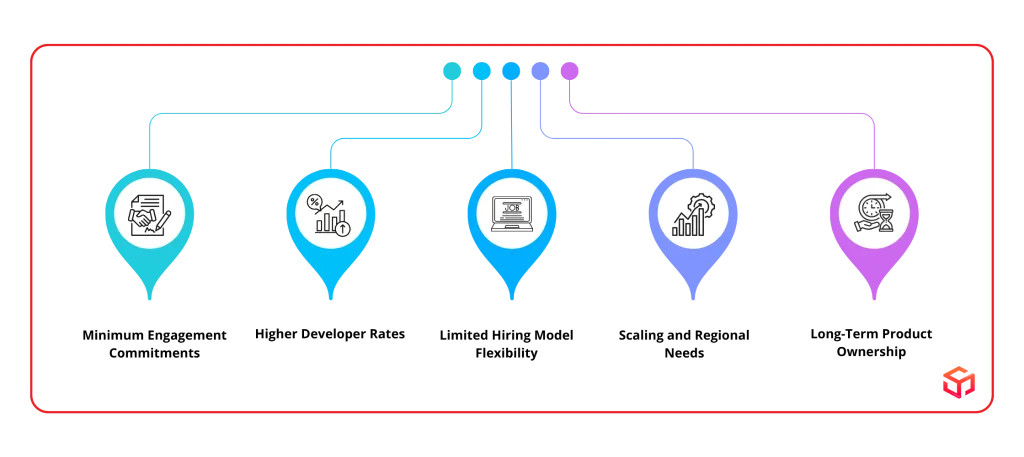
Common reasons buyers look elsewhere include:
Minimum Engagement Commitments: Lemon.io typically requires long engagement windows. Startups experimenting with MVP validation or short sprint builds often need flexible contracts instead of fixed hourly commitments.
Higher Developer Rates: Senior developers generally range between $45–$95 per hour. While quality remains strong, early-stage companies often seek optimized cost structures without sacrificing engineering expertise.
Limited Hiring Model Flexibility: Marketplace hiring works well for individual contributors. Scaling teams, however, may require managed squads, DevOps support, QA integration, or architectural ownership beyond freelancer engagement.
Scaling and Regional Needs: Some organizations prioritize timezone overlap, domain expertise, or offshore delivery advantages. Alternative platforms provide broader access to global engineering ecosystems.
Long-Term Product Ownership: Companies moving from experimentation to full product development often transition toward dedicated development teams rather than short-term contractor relationships.
These challenges don’t indicate platform weakness. They simply show that engineering growth demands adaptable hiring models.
Hire Developers Without Hiring Risk
Evaluate real engineering performance instead of resumes. Our 40-hour free trial lets your team experience collaboration, productivity, and technical alignment before committing resources or budgets.
Start TrialTop Lemon.io Alternatives to Compare in 2026
Every remote hiring platform solves a different business problem. Some prioritize elite vetting, others focus on scalability, cost efficiency, or managed delivery models. The sections below compare leading alternatives to help you identify the best fit.
Soft Suave

Selecting the right engineering partner often determines whether a product scales smoothly or accumulates technical debt. Soft Suave approaches hiring differently by combining talent vetting with delivery ownership, creating a partnership beyond traditional freelance marketplaces.
Soft Suave operates as a full-cycle software development company focused on long-term engineering success rather than transactional hiring. Instead of simply matching freelancers, they align developers with product architecture, sprint workflows, and delivery goals.
Unlike marketplace platforms, Soft Suave emphasizes dedicated teams, agile collaboration, and predictable scaling. Their engineers integrate directly into client tech stacks, ensuring continuity across development phases.
A major advantage is their 40-hour free trial, allowing companies to validate technical fit, communication flow, and engineering quality before long-term engagement. This removes hiring risk, one of the biggest concerns for CTOs.
Soft Suave also supports advanced product innovation through AI development services, enabling companies to build intelligent platforms, automation workflows, or data-driven applications to scale faster with specialized expertise.
Overall, Soft Suave suits businesses needing engineering ownership, scalability, and predictable outcomes.
Toptal

Toptal positions itself as a premium engineering marketplace known for strict vetting and high seniority levels. Companies typically choose this platform when quality matters more than cost efficiency.
Developers undergo rigorous screening, resulting in a highly curated talent pool. Enterprise organizations and funded startups frequently rely on Toptal for mission-critical development or architectural leadership roles.
However, pricing tends to sit at the higher end, making it better suited for organizations prioritizing expertise over budget optimization.
Arc.dev

Arc.dev focuses on fast remote hiring with modern workflows designed for distributed teams. Its strength lies in connecting companies with pre-screened developers experienced in asynchronous collaboration.
The platform works well for startups needing developers quickly without running extensive recruitment pipelines. Arc.dev emphasizes flexibility, enabling teams to scale contributors up or down based on sprint demands.
It is ideal for companies already comfortable managing remote engineers internally.
Flexiple

Flexiple offers a curated network of freelance developers and designers. The platform targets startups seeking reliable engineers without enterprise-level pricing structures.
Matching usually happens quickly, helping founders reduce hiring delays. Flexiple works best for early-stage companies that require short- to mid-term development support while maintaining access to vetted technical talent.
Its streamlined onboarding experience appeals to teams with limited recruitment resources.
Struggling to Find Reliable Developers?
Delayed releases and unstable freelancers slow innovation. Soft Suave delivers vetted engineers who integrate fast, stabilize delivery pipelines, and help your product roadmap move forward confidently.
Hire Experts NowCloudDevs

CloudDevs specializes in connecting companies with Latin American developers. The platform’s key advantage is timezone alignment with North American businesses.
Many organizations choose CloudDevs for cost optimization while maintaining strong communication overlap. Developers typically integrate into existing teams rather than operating as fully managed units.
This approach suits companies seeking affordable remote engineering without sacrificing collaboration efficiency.
Gun.io

Gun.io differentiates itself through engineering-led vetting processes. Many developers on the platform are recommended by experienced software engineers rather than traditional recruiters.
This results in a technically strong talent pool. Companies needing senior engineers for backend systems, infrastructure modernization, or complex integrations often find Gun.io valuable.
The platform focuses on quality and technical depth rather than large-scale staffing.
Index.dev

Index.dev blends marketplace flexibility with managed hiring support. The platform helps companies source developers while providing onboarding assistance and engagement guidance.
It works well for businesses unsure whether they need freelancers or dedicated teams. Index.dev bridges the gap between traditional recruiting and modern remote hiring platforms.
Its hybrid approach appeals to growing startups transitioning into structured engineering organizations.
Turing

Turing leverages AI-driven matching algorithms to connect companies with global developers. Its massive talent network enables rapid scaling across multiple technology stacks.
Enterprises often use Turing to build distributed teams quickly. Automated vetting and performance monitoring tools streamline hiring operations, making it suitable for organizations managing large engineering initiatives.
However, companies still require strong internal management practices.
Your Next Release Deserves Expert Developers
From AI systems to SaaS platforms, our engineers integrate seamlessly into workflows, ensuring predictable delivery timelines, stronger collaboration, and measurable progress across every sprint milestone.
Explore TalentProxify

Proxify focuses on European developers and emphasizes strong vetting standards. Companies seeking nearshore talent with cultural alignment often explore this platform.
Matching times remain relatively fast, and developers integrate smoothly into agile teams.
Proxify works particularly well for organizations needing experienced engineers without committing to long recruitment cycles. It balances quality and flexibility effectively.
Upwork

Upwork remains one of the largest freelance marketplaces globally. Unlike curated platforms, it provides access to a vast talent pool across skill levels and budgets.
Companies gain maximum flexibility but must manage vetting themselves. Upwork suits experimentation, short projects, and prototype development rather than long-term engineering ownership.
It offers freedom, but success depends heavily on internal hiring expertise.
How to Choose the Right Lemon.io Alternative

Selecting a hiring platform should align with engineering strategy, not trends. The right decision depends on team maturity, technical complexity, and long-term scalability expectations. The framework below simplifies the evaluation process.
Use this decision framework:
Define Your Hiring Model: Decide between freelancers, dedicated teams, or managed delivery. Marketplace developers suit short tasks, while structured engagement models better support evolving products requiring architectural continuity.
Assess Technical Requirements: Complex systems involving microservices, AI pipelines, or cloud-native infrastructure demand senior engineers capable of system design—not just feature implementation.
Evaluate Team Scalability: Fast-growing products require platforms that allow smooth expansion without restarting recruitment. Consistent teams reduce onboarding costs and preserve institutional knowledge.
Balance Speed vs Control: Rapid hiring platforms reduce recruitment time but may shift management responsibility internally. Organizations must determine whether they want execution ownership or talent sourcing only.
Pricing Breakdown – What You’re Really Paying on Each Platform
Understanding pricing models prevents hidden costs from disrupting engineering budgets. Platforms advertise hourly rates, but total expenditure often depends on engagement structure and operational overhead.
Here’s what companies actually pay for:
Hourly Developer Rates: Rates vary widely depending on vetting quality and geography. Premium marketplaces charge higher hourly costs, while offshore development teams optimize pricing through distributed delivery models.
Platform Markups and Fees: Marketplaces typically include service margins within hourly billing. These costs may not be immediately obvious, but they impact long-term hiring investment decisions.
Minimum Commitment Requirements: Some platforms enforce monthly or hourly thresholds. These commitments can increase the total cost of ownership when the project scope changes mid-cycle.
Management and Replacement Costs: Replacing developers introduces onboarding delays and productivity loss. Managed partners reduce this risk by maintaining stable engineering teams.
Build Faster With Proven Engineering Teams
Modern tech stacks demand experienced engineers who understand architecture, DevOps, and scalability. Soft Suave connects you with specialists ready to accelerate development without hiring complexity.
Start BuildingWhich Lemon.io Alternative Is Best for Your Use Case?
Choosing a platform becomes easier when mapped directly to business scenarios. Instead of asking which platform is best overall, focus on which solution aligns with your development goals.
Best for Startup MVP Development
Upwork or Flexiple work well when validating ideas quickly. These platforms enable experimentation without long-term commitments, allowing founders to iterate before scaling engineering investments.
Best for Enterprise-Level Projects
Toptal, Soft Suave, and Turing suit organizations building complex platforms requiring senior architects, strong vetting, and reliable delivery consistency across large distributed engineering teams.
Best for Long-Term Dedicated Teams
Soft Suave excels when companies require continuity, agile collaboration, and ownership across the product lifecycle. Dedicated offshore teams ensure stable development velocity and knowledge retention.
Best for Cost-Efficient Scaling
CloudDevs and Index.dev provides balanced pricing models while maintaining access to experienced global developers, making them attractive for growing SaaS companies managing budgets carefully.
Best for Fast Hiring Needs
Arc.dev, Soft Suave, and Gun.io help organizations needing engineers quickly without compromising technical quality or onboarding speed.
Ultimately, companies aiming to hire remote developers successfully must focus less on platform popularity and more on alignment with business needs and remote team strategy.
Conclusion
Building a high-performing engineering team is no longer about finding developers; it’s about choosing the right hiring architecture. Platforms differ in speed, flexibility, ownership, and scalability, and those differences directly impact delivery success.
The smartest organizations treat hiring decisions like architectural decisions. Evaluate risk, validate technical alignment, and prioritize long-term collaboration over short-term convenience.
Whether you need AI innovation, product scaling, or dedicated remote teams, the right Lemon.io alternative unlocks sustainable engineering momentum.
Make your next hiring move intentional, strategic, and future-ready, because the right development partner doesn’t just fill roles; they accelerate innovation.
FAQs
How do I choose the right alternative to Lemon.io for my team?
Evaluate project scope, technical complexity, and management capacity. Teams needing flexibility often prefer marketplaces, while long-term product development benefits from dedicated development partners offering consistent engineering ownership.
Which Lemon.io alternative is best for startups with a limited budget?
Startups usually benefit from flexible platforms like Upwork, Flexiple, or offshore development partners like Soft Suave that provide scalable pricing without strict minimum commitments, enabling controlled experimentation during early product stages.
Which Lemon.io alternative is best for long-term remote developers?
Dedicated team providers or staff augmentation partners typically work best. They maintain developer continuity, improve collaboration, and reduce onboarding costs compared to rotating freelancer marketplaces.
Is Soft Suave a good alternative to Lemon.io?
Yes. Soft Suave works well for companies needing long-term engineering collaboration, predictable scaling, and delivery ownership instead of short-term freelancer engagements typically offered by marketplace-based hiring platforms.
What are the best Lemon.io alternatives right now?
Top alternatives include Soft Suave, Toptal, Arc.dev, Flexiple, Turing, Proxify, Gun.io, CloudDevs, Index.dev, and Upwork, each addressing different hiring models, budgets, and engineering maturity levels.
Tags:

Ramesh Vayavuru is the Founder & CEO of Soft Suave Technologies, with 15+ years of experience delivering innovative IT solutions.
Related Blogs