Hiring Developers In Vietnam For Global Growth

TL;DR :-
Understand why global companies choose Vietnam for offshore development, including talent quality, pricing advantages, etc.
Explore developer hourly rates, hiring steps, benefits, challenges, and practical strategies for managing Vietnamese engineering teams successfully.
Compare Vietnam with India and other outsourcing regions to choose the right hybrid hiring strategy for scalable, cost-efficient software development.
Finding skilled developers fast is harder than ever. Talent shortages slow product launches, increase costs, and strain internal teams.
Many companies explore Vietnam, hoping for quality engineering at sustainable costs, yet struggle with hiring models, pricing clarity, and operational risks. Choosing the wrong outsourcing strategy often leads to delivery delays and technical debt.
Businesses need a practical, decision-focused roadmap, not marketing claims. This guide explains how hiring developers in Vietnam actually works, what it costs, where risks exist, and how companies can build scalable engineering teams without compromising quality, security, or long-term product success.
Why Companies Are Hiring Developers in Vietnam
Vietnam is gaining recognition as a reliable engineering hub. Businesses evaluate talent availability, scalability, and cost efficiency before expanding offshore teams, which makes understanding the underlying drivers essential before exploring hiring approaches.
Vietnam’s technology ecosystem has grown rapidly over the last decade. Global companies now view it as more than a low-cost outsourcing option.
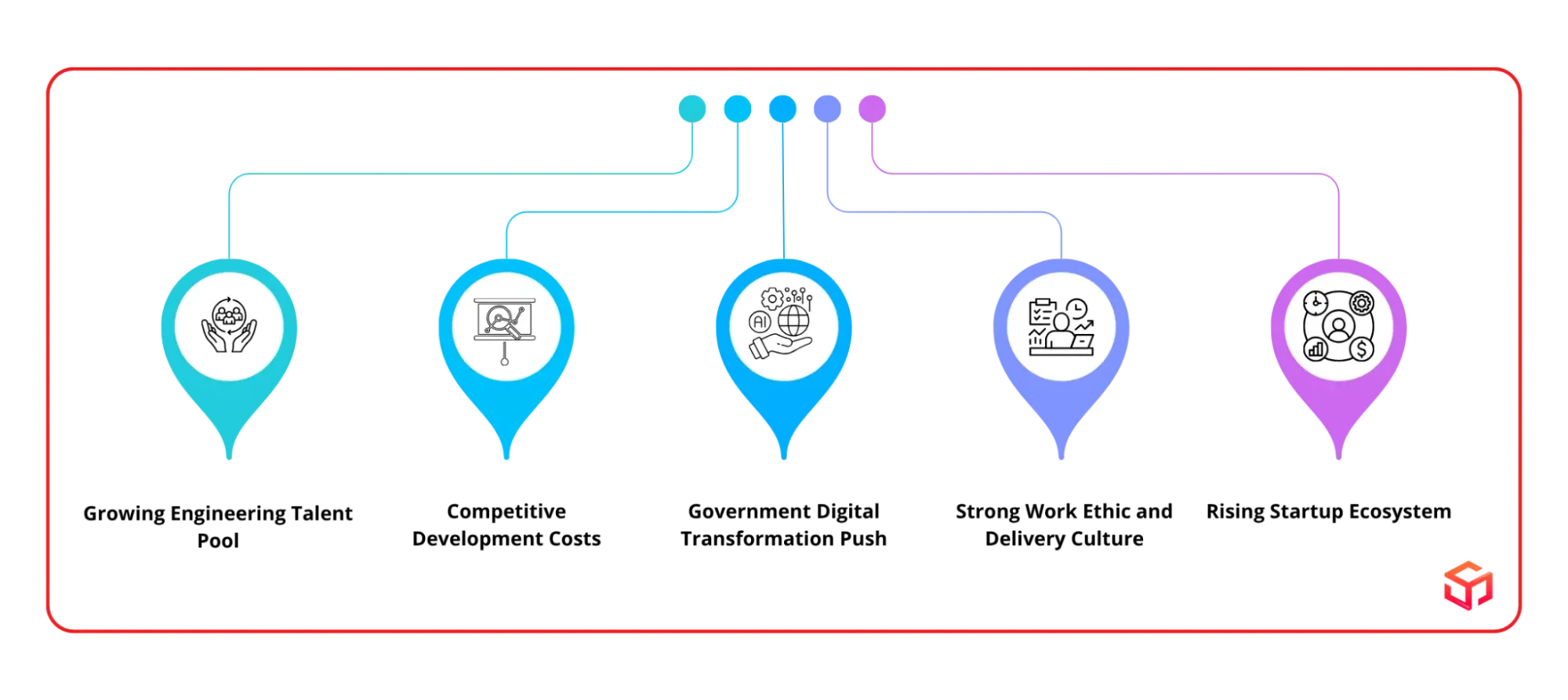
Several factors drive this shift:
Growing Engineering Talent PoolVietnam produces over 50,000 IT graduates yearly. Universities emphasize mathematics, computer science, and engineering fundamentals, creating developers skilled in backend systems, mobile applications, and modern cloud architectures.
Competitive Development CostsDeveloper salaries remain lower than in Western markets. Companies reduce operational expenses while maintaining acceptable engineering quality, enabling startups and enterprises to scale development without overspending.
Government Digital Transformation PushNational initiatives support software exports and digital innovation. Technology parks and startup investments continue attracting global outsourcing contracts and international partnerships.
Strong Work Ethic and Delivery CultureVietnamese developers are known for discipline, adaptability, and commitment to deadlines. Many teams follow Agile delivery models and quickly align with distributed product teams.
Rising Startup EcosystemCities like Ho Chi Minh City and Hanoi now host growing startup communities, creating exposure to modern technologies such as AI, SaaS platforms, and cloud-native product development.
Vietnam Vs Other Outsourcing DestinationsDestination
Choosing an outsourcing location involves balancing cost, scalability, communication efficiency, and technical maturity. Comparing Vietnam with other global destinations helps decision-makers identify the most sustainable hiring strategy before committing resources.
Vietnam performs well in cost efficiency and emerging engineering capabilities. However, comparing it with established outsourcing ecosystems reveals important strategic differences.
Vietnam vs India
Vietnam and India both attract global software outsourcing investments, yet they serve different strategic needs.
Vietnam offers disciplined developers, competitive pricing, and strong growth in modern technologies, making it suitable for startups and focused product teams.
India remains the world’s largest outsourcing ecosystem with massive talent availability, deep enterprise experience, and mature delivery frameworks developed through decades of global engagements.
Indian teams typically demonstrate stronger English proficiency and exposure to large-scale distributed architectures.
Organizations planning aggressive product scaling, multi-technology requirements, or enterprise modernization initiatives often favor India, while Vietnam works well for controlled team expansion and cost-efficient engineering execution.
If your roadmap demands scalable product engineering, many companies adopt a hybrid outsourcing approach. Businesses often hire software developers in India alongside Vietnam teams to combine Vietnam’s cost efficiency with India’s large talent pool, enterprise experience, and faster long-term scaling capabilities.
Zero Risk Hiring Starts Here
Experience real project progress with our 40-hour free trial. Work with experienced developers, validate technical fit, and confidently scale your engineering team without upfront investment.
Start TrialVietnam vs Eastern Europe
Eastern European countries like Poland and Ukraine offer highly experienced developers with strong architectural expertise.
However, development costs are significantly higher. Vietnam provides comparable technical capabilities for many projects while maintaining lower operational expenses and growing global outsourcing exposure.
Vietnam vs Latin America
Latin American destinations such as Brazil and Mexico provide strong timezone alignment for US companies.
Yet developer costs remain higher than in Vietnam. Businesses prioritizing affordability and long-term offshore scalability often choose Vietnam despite reduced real-time collaboration overlap.
Vietnam vs Philippines
The Philippines excels in communication-heavy outsourcing roles and customer support services. Vietnam stands out in core software engineering, backend development, and technical execution.
Companies building product-focused engineering teams frequently prefer Vietnam’s stronger programming and technical delivery culture.
Vietnam vs China
China possesses advanced technical expertise and large engineering capacity, but it comes with higher costs and complex regulatory considerations.
Vietnam offers a simpler outsourcing environment, competitive pricing, and increasing alignment with international software development standards.
Vietnam vs Malaysia
Malaysia provides stable infrastructure and strong English communication skills, but generally higher developer salaries.
Vietnam appeals to companies seeking cost-efficient engineering teams while still accessing skilled developers capable of supporting modern cloud and web application development projects.
Cost of Hiring Developers in Vietnam
Cost evaluation remains the primary driver behind offshore hiring decisions. Understanding salary benchmarks, hourly rates, and regional comparisons helps organizations build realistic budgets before selecting engagement or outsourcing models.
Average Salary of Software Developers
Salary structures vary based on experience level, city location, and specialization. Vietnam offers competitive compensation compared to global markets.
Typical annual salary ranges:
Junior DevelopersEntry-level engineers earn significantly less than their Western counterparts. They handle testing, feature development, and maintenance tasks under senior supervision while gaining exposure to real production systems.
Mid-Level DevelopersMid-level engineers oversee sprint deliverables, API integrations, and key application modules. Companies rely heavily on this segment for stable offshore development productivity.
Senior DevelopersSenior engineers command higher salaries but remain cost-efficient globally. They contribute to architecture design, performance optimization, and DevOps workflows supporting scalable applications.
Hourly Developer Rates
Hourly pricing depends on hiring model and vendor maturity. Vietnam developer hourly rates typically start from $15 per hour, depending on experience level, technology expertise, and hiring model. Junior developers cost less, while senior engineers and specialized experts command higher rates based on project complexity and delivery expectations.
Cost Comparison With Other Countries
Vietnam sits between premium Western markets and highly mature outsourcing destinations.
Comparison insights:
United States developers remain the most expensive globally.
Eastern Europe offers strong quality but higher pricing.
Vietnam provides affordability with growing expertise.
India delivers large-scale talent availability with competitive pricing.
Hiring Models for Vietnam Developers

Selecting the right hiring model directly influences delivery success. Businesses must align engagement structure with project complexity, scalability requirements, and internal technical leadership before onboarding offshore developers.
Freelance Developers
Freelance hiring offers flexibility for short engagements or experimental projects. Companies exploring market validation or MVP development often begin with freelance engineers before committing to long-term development partnerships.
Quick onboarding with minimal contractual complexity.
Suitable for prototype development and small feature implementation.
Requires strong internal project management and technical supervision.
Dedicated Development Team
Dedicated teams function as remote extensions of internal engineering departments. This model works best for product companies needing continuous development velocity and predictable sprint delivery cycles.
Developers align closely with business goals and product vision.
Supports long-term Agile collaboration and knowledge retention.
Enables scalable engineering expansion without internal hiring delays.
Build Your Dream Dev Team Today
Access skilled developers across modern tech stacks, cloud platforms, and scalable architectures. Soft Suave helps you build high-performance teams that accelerate innovation and product delivery.
Build Your TeamOffshore Development Company
Offshore vendors manage recruitment, infrastructure, compliance, and delivery governance. Enterprises choose this model when they want operational efficiency without managing recruitment or administrative overhead internally.
Managed development lifecycle with established QA and DevOps processes.
Reduced operational burden through vendor-managed engineering teams.
Reliable option for complex enterprise-grade application development.
Before choosing between staff augmentation, dedicated teams, or fully managed outsourcing partnerships, businesses should evaluate the best hiring models for scaling development teams quickly to ensure alignment with long-term delivery goals.
How to Hire Developers in Vietnam (Step-by-Step)
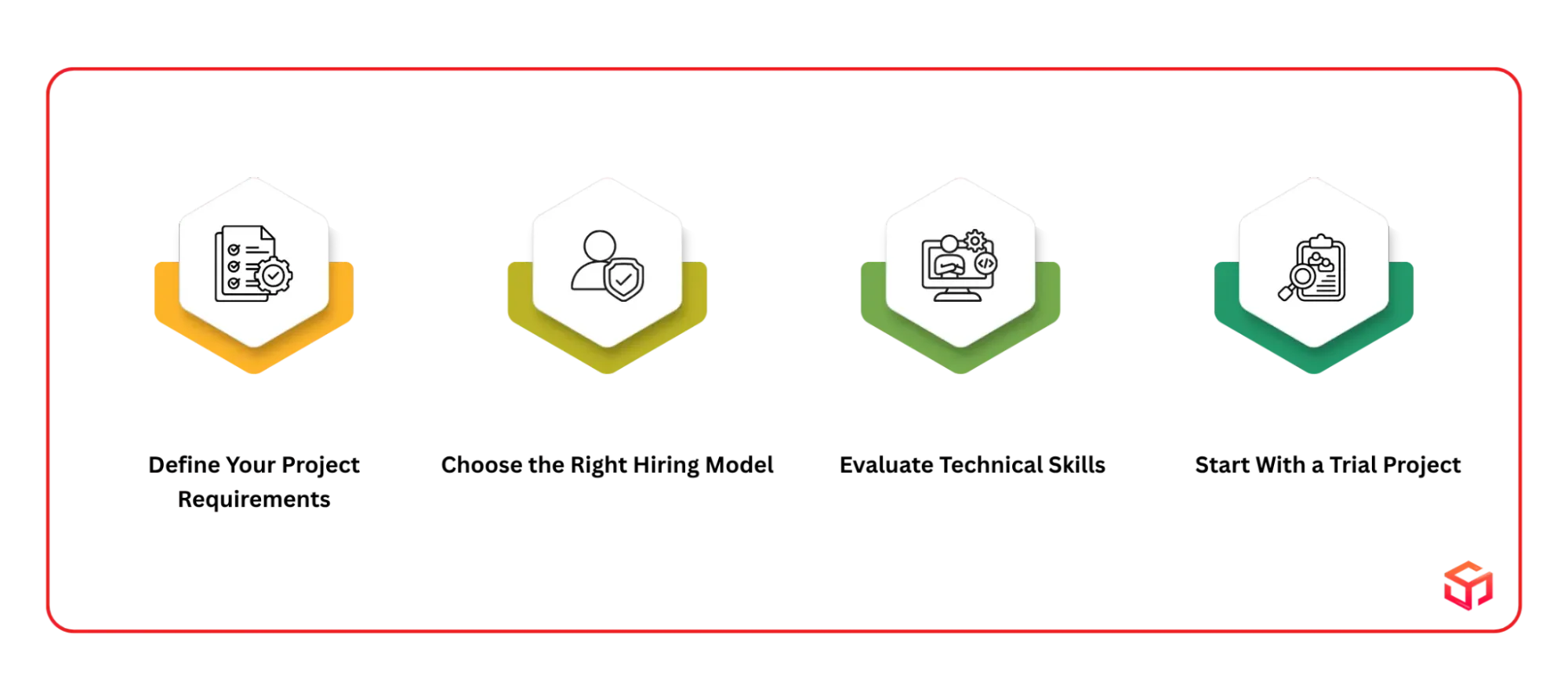
Hiring success depends on structured execution rather than location choice alone. Following a clear process minimizes onboarding risks, ensures technical alignment, and improves collaboration outcomes across distributed development environments.
Step 1: Define Your Project Requirements
Clear requirements prevent misaligned hiring decisions.
Key actions include:
Identify product scope, architecture needs, and technology stack requirements clearly before recruiting developers to avoid skill mismatches and unnecessary onboarding delays.
Define sprint goals, delivery timelines, and budget expectations so offshore teams understand performance metrics and success criteria from the beginning.
Step 2: Choose the Right Hiring Model
Hiring models must match project maturity.
Steps to follow:
Choose freelancers for experimentation or short-term tasks requiring specialized expertise without long-term commitments.
Select dedicated teams when product development requires continuous iteration, scalability, and long-term collaboration.
Partner with offshore vendors when delivery, ownership, compliance management, and engineering governance are business priorities.
Step 3: Evaluate Technical Skills
Technical assessment ensures long-term delivery quality.
Recommended evaluation methods:
Conduct coding assessments reflecting real-world development scenarios rather than theoretical exercises to measure practical engineering capability.
Review Git repositories and past project contributions to assess architecture understanding, collaboration skills, and coding standards adherence.
Evaluate communication clarity alongside technical expertise because remote collaboration success depends heavily on documentation and discussion quality.
Step 4: Start With a Trial Project
Pilot engagements reduce outsourcing risks.
Best practices include:
Begin with a small sprint or feature delivery project to evaluate responsiveness, collaboration efficiency, and code quality before scaling engagement size.
Monitor delivery timelines, testing standards, and communication discipline to determine long-term partnership viability.
Organizations should also understand how to avoid legal risks when hiring international developers to protect intellectual property, compliance standards, and contractual obligations during early engagement phases.
Advantages of Hiring Vietnam Software Developers
Vietnam provides several operational advantages for companies building distributed engineering teams. Understanding these benefits helps organizations evaluate whether Vietnam aligns with long-term product development and innovation goals.
Key advantages include:
Cost Efficiency: Lower salaries reduce development expenditure while allowing companies to reinvest savings into product innovation, infrastructure scaling, and customer experience improvements.
Skilled Engineering Workforce: Strong academic training produces developers proficient in modern programming frameworks, backend architecture, mobile development, and cloud deployment environments.
High Adaptability: Vietnamese engineers quickly learn new technologies and integrate into Agile workflows, supporting rapid iteration cycles required by modern software companies.
Scalable Development Capacity: Companies can expand engineering teams faster compared to domestic hiring markets experiencing talent shortages.
Tired Of Offshore Hiring Risks?
Uncertain quality and communication gaps can derail projects. Soft Suave connects you with reliable engineers, ensuring predictable delivery, transparent collaboration, and long-term development stability.
Hire Our ExpertsChallenges of Hiring Developers in Vietnam
Every outsourcing destination presents operational challenges. Understanding these limitations enables businesses to build mitigation strategies that maintain productivity and delivery reliability across distributed engineering environments.
Key challenges include:
Time Zone Differences: Time-zone alignment affects collaboration efficiency. Limited overlap with North American working hours may slow real-time decision-making during complex development phases requiring frequent coordination.
Cultural Communication Differences: Communication styles vary across regions. Developers may avoid direct disagreement during discussions, requiring managers to encourage open feedback and structured technical reviews.
Talent Competition: Global demand for Vietnamese developers continues to increase. Experienced engineers receive multiple international offers, creating higher retention challenges for companies without strong engagement or career development strategies.
Best Practices for Managing Remote Vietnam Developers
Successful offshore collaboration depends on structured management practices. Organizations that establish clear workflows, communication systems, and performance expectations consistently achieve higher productivity from distributed engineering teams.
Recommended practices:
Adopt Agile Delivery FrameworksDaily standups, sprint planning sessions, and retrospective reviews ensure transparency, continuous improvement, and consistent delivery velocity across remote development teams.
Use Collaborative Project Management ToolsPlatforms like Jira, GitHub, and Slack maintain centralized communication, task tracking, and version control visibility across geographically distributed engineering environments.
Prioritize Documentation CultureWell-maintained technical documentation reduces dependency on real-time communication and supports knowledge transfer between teams working across different time zones.
Invest in Relationship BuildingRegular video meetings and technical discussions build trust, improve collaboration quality, and strengthen long-term team engagement.
Conclusion
Hiring developers in Vietnam offers clear advantages, but success depends on execution strategy, not geography alone.
Companies that treat offshore hiring as a structured engineering expansion consistently outperform those chasing cost savings alone. Vietnam delivers skilled developers, competitive pricing, and growing innovation capacity.
However, scaling challenges and talent competition require thoughtful planning. Businesses aiming for stable product delivery often combine Vietnam exploration with mature outsourcing ecosystems to balance expertise, scalability, and operational resilience.
The real competitive advantage comes from building the right hiring model, governance framework, and long-term engineering partnership starting today.
Frequently Asked Questions
Is Vietnam a good country for hiring developers?
Yes. Vietnam offers competitive developer costs, strong technical education, and a growing software industry. It works well for startups and mid-sized projects seeking skilled engineers without Western-level development expenses.
How much does it cost to hire a developer in Vietnam?
Costs vary by experience and hiring model. Junior developers are highly affordable, while senior engineers remain cheaper than in Western markets. Dedicated teams provide balanced pricing with consistent delivery quality.
What technologies do Vietnamese developers specialize in?
Vietnamese developers commonly work with JavaScript frameworks, React, mobile development, cloud platforms, backend engineering, and emerging AI-driven applications supporting modern digital product ecosystems.
Is outsourcing to Vietnam safe?
Yes, when proper contracts, NDAs, and vendor verification processes are followed. Partnering with experienced outsourcing companies ensures intellectual property protection, compliance adherence, and secure development workflows.

Ramesh Vayavuru is the Founder & CEO of Soft Suave Technologies, with 15+ years of experience delivering innovative IT solutions.
Related Blogs