SaaS Development Costs: A Complete Breakdown for 2026

TL;DR :-
Complete breakdown of SaaS development costs in 2026, from MVP budgeting to enterprise platform investment planning.
Detailed phase-wise cost analysis covering design, development, testing, deployment, outsourcing models, and hidden operational expenses.
Building a SaaS product is exciting until budgeting starts. Founders often ask the same question: Why do quotes vary from $20,000 to $500,000?
The confusion comes from hidden technical decisions, architecture choices, and team models that dramatically change costs. Many companies underestimate infrastructure, scalability, and long-term maintenance expenses. Others overspend before validating product-market fit.
Understanding SaaS development costs is not about guessing numbers; it’s about understanding how engineering, design, and operations work together.
This guide breaks down real-world SaaS cost structures so you can plan investments confidently and avoid expensive mistakes.
What Determines SaaS Development Costs?
Every SaaS product has unique technical requirements, but several universal factors influence pricing. Understanding these drivers helps founders estimate budgets accurately before diving into architecture and development decisions.
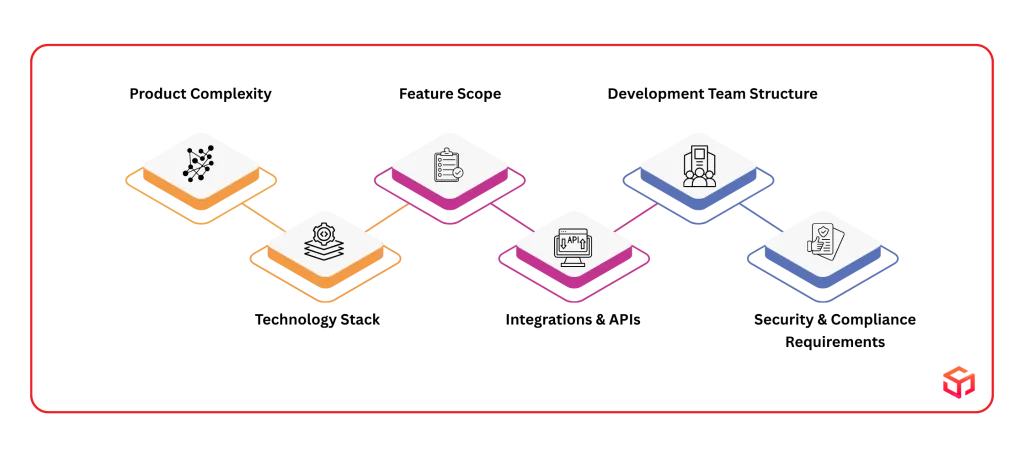
SaaS costs are shaped primarily by engineering complexity and delivery models. Below are the core variables that determine total investment.
Product Complexity
Complex workflows, data-heavy systems, and advanced analytics significantly increase development effort. Simple tools cost less, while platforms requiring automation, integrations, or AI-based features demand larger engineering teams and longer delivery timelines.Feature Scope
Each feature adds backend logic, frontend interfaces, and testing requirements. Overloaded feature lists inflate budgets quickly. Successful SaaS product development companies prioritize essential capabilities first and expand functionality after market validation.Development Team Structure
An in-house team increases operational expenses through salaries, onboarding, and management overhead. Distributed or offshore development teams provide flexibility and reduce fixed costs while maintaining engineering productivity and scalability.Technology Stack
Modern stacks like React, Node.js, or microservices architectures improve scalability but require experienced engineers. Technology decisions influence long-term maintenance, performance optimization, and cloud infrastructure spending.Integrations & APIs
Payment gateways, CRM tools, analytics systems, and third-party APIs introduce additional engineering effort. Integration complexity often becomes one of the fastest-growing cost drivers during SaaS expansion stages.Security & Compliance Requirements
Enterprise SaaS platforms must meet standards like GDPR or SOC 2. Implementing secure authentication, encryption, and audit logging increases development time but protects long-term business viability.
Zero Risk Start For Your SaaS Project
Experience Soft Suave’s engineering expertise without upfront commitment. Use our 40-hour free trial to validate talent fit, delivery speed, and collaboration efficiency risk-free.
Start free TrialAverage Cost of Building a SaaS Product in 2026
SaaS budgets vary widely, but industry benchmarks provide realistic expectations. Understanding cost ranges across product maturity levels helps founders align investment with growth goals before exploring detailed cost components.
MVP Development Cost
An MVP focuses on validation rather than perfection. It delivers core functionality needed to test user adoption, gather feedback, and confirm market demand before scaling engineering investment.
Typical MVP SaaS Cost: Starts from $20,000
Key characteristics include:
Single user type with limited permissions.
Basic authentication and onboarding flow.
Core product functionality only.
Minimal third-party integrations.
Cloud hosting with simplified architecture.
An MVP built using lean engineering principles minimizes risk while enabling rapid iteration. Teams that prioritize SaaS product development strategy early often significantly reduce long-term reengineering costs.
The goal is simple: validate business value before investing heavily in enterprise-grade infrastructure.
Mid-Level SaaS Application Cost
After validation, SaaS products evolve into scalable platforms supporting multiple users, integrations, and automated workflows. This stage introduces operational complexity and higher development investment.
Typical Mid-Level SaaS Cost: Starts from $50,000
Common capabilities include:
Multi-role access control systems.
Payment integrations and subscription management.
API layer enabling external integrations.
Custom dashboards and analytics.
Data synchronization across services.
User experience becomes critical here. Designing intuitive workflows can represent nearly 15–20% of total development investment.
Costs increase because the product shifts from prototype to revenue engine.
Enterprise-Grade SaaS Platform Cost
Enterprise SaaS solutions prioritize scalability, performance, and reliability. These systems support thousands of users, complex workflows, and strict compliance standards.
Typical Enterprise SaaS Cost: Starts from $80,000
Enterprise platforms typically include:
Multi-tenancy architecture.
Enterprise SSO and advanced authentication.
Compliance frameworks such as GDPR or SOC 2.
Advanced analytics pipelines.
Microservices and distributed infrastructure.
At this stage, engineering focuses less on features and more on uptime, resilience, and performance monitoring.
Cost Breakdown by Development Phase
SaaS development follows structured engineering phases, each contributing differently to overall expenses. Understanding how costs distribute across the lifecycle helps organizations prioritize investments and avoid budget overruns.
UI/UX Design
Design defines how users interact with the platform. Poor UX decisions create technical debt and increase redevelopment costs later in the lifecycle.
UI/UX typically accounts for 15–20% of total development costs.
Key activities include:
User research and workflow mapping.
Wireframing and prototyping.
Interaction design optimization.
Accessibility and usability testing.
Well-designed interfaces reduce onboarding friction and improve customer retention.
Frontend Development
Frontend development translates design into interactive user experiences. Modern SaaS interfaces require responsive layouts, dynamic state management, and seamless data synchronization.
Cost drivers include:
Component-based architecture implementation.
Cross-device compatibility testing.
Real-time UI updates.
Performance optimization for large datasets.
Interactive functionality, not visual styling alone, largely determines frontend effort.
Build Faster With Proven SaaS Engineers
Accelerate development using modern tech stacks, cloud-native design, and agile delivery models. Soft Suave engineers integrate seamlessly with your team to build scalable SaaS products confidently.
Hire Experts NowBackend Development
Backend engineering represents the largest investment area, consuming nearly 35–45% of total SaaS development costs.
Backend responsibilities include:
Database architecture and data modeling.
API development and integrations.
Business logic implementation.
Security enforcement and scalability management.
Backend decisions directly influence system stability and future expansion costs.
QA & Testing
Testing ensures software reliability before release. Skipping structured QA processes leads to expensive post-launch fixes and customer dissatisfaction.
QA activities include:
Automated regression testing.
Performance and load testing.
Security vulnerability checks.
Cross-browser compatibility validation.
Testing investment grows alongside system complexity but prevents costly downtime.
Deployment & DevOps
Deployment transforms software into a continuously operating service. DevOps practices ensure smooth releases, scalability, and system monitoring.
DevOps cost components include:
CI/CD pipeline setup.
Cloud infrastructure configuration.
Monitoring and logging systems.
Automated scaling mechanisms.
DevOps turns SaaS development from a project into an always-on operational platform.
In-House vs Outsourced SaaS Development Costs
Choosing the right development model significantly affects total project expenditure. Companies must evaluate cost efficiency, talent availability, and scalability before selecting between internal teams and outsourcing partners.
Factor | In-House Team | Outsourced Team |
Cost | Highest due to salaries and overhead | 40–60% lower operational cost |
Hiring Speed | Slow recruitment cycles | Rapid onboarding |
Talent Access | Limited local pool | Global expertise |
Scalability | Hard to expand quickly | Flexible resource scaling |
Management | Full internal control | Shared collaboration model |
Building internal teams works for long-term product organizations. However, many startups choose outsourcing to accelerate delivery.
Companies planning rapid launches frequently hire SaaS developers through experienced offshore development partners, gaining senior engineering expertise without long-term hiring commitments.
Outsourcing SaaS development to India has become one of the most common practices for startups and enterprises seeking scalable and cost-efficient product delivery.
India-based outsourcing stands out due to its mature engineering ecosystem, strong communication standards, and proven SaaS delivery experience. Indian development firms follow established agile methodologies, provide access to highly skilled full-stack engineers, and deliver cloud-native solutions without compromising quality.
With deep expertise in DevOps automation, scalable architectures, and rapid team scaling, companies can accelerate development timelines. Time-zone overlap with global markets and strong English proficiency further enable seamless collaboration and long-term product success.
Struggling To Control SaaS Build Costs?
Unexpected development expenses slow product growth and burn capital fast. Soft Suave helps you optimize architecture, reduce waste, and launch faster with experienced SaaS engineers.
Start PlanningHidden Costs in SaaS Development
Initial development budgets rarely represent the true cost of running a SaaS business. Operational expenses continue long after launch and must be planned early to maintain profitability.
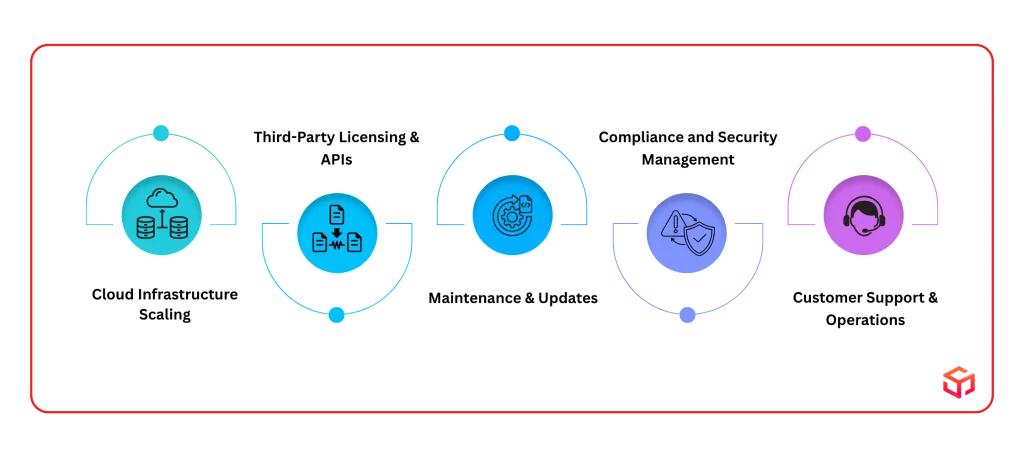
Hidden cost categories include:
Cloud Infrastructure Scaling: As user adoption grows, hosting, storage, and bandwidth expenses increase. Auto-scaling environments improve performance but introduce variable operational spending that founders often underestimate during planning.
Third-Party Licensing & APIs: Payment systems, analytics tools, communication APIs, and AI services charge usage-based fees. These recurring expenses accumulate quickly as platform adoption expands.
Maintenance & Updates: Bug fixes, feature enhancements, and technology upgrades require continuous engineering investment. Maintenance typically consumes 15–25% of annual development cost.
Compliance and Security Management: Regular security audits, monitoring tools, and compliance updates ensure data protection. Ignoring these costs risks breaches, regulatory penalties, and long-term reputational damage.
Customer Support & Operations: Successful SaaS platforms require onboarding assistance, documentation, and technical support teams to maintain user satisfaction and retention rates.
Understanding hidden costs shifts budgeting from short-term thinking to sustainable SaaS operations.
Conclusion
Smart SaaS founders don’t chase the lowest price; they invest in the right architecture from day one. Understanding SaaS development costs empowers you to plan strategically, validate ideas faster, and scale without rebuilding your platform later.
Whether you are launching an MVP or engineering an enterprise ecosystem, success depends on balancing innovation with sustainable technical execution. The companies winning in 2026 are those building scalable, resilient SaaS products with experienced engineering partners.
If your roadmap includes growth, automation, and long-term platform success, now is the moment to design your SaaS investment strategy with confidence and clarity.
FAQ
How much does it cost to build a SaaS app from scratch?
SaaS development costs typically start from $20,000 for a lean MVP and can exceed $500,000 for enterprise-grade platforms. The final investment depends on feature complexity, integrations, scalability requirements, security standards, and the chosen development and delivery model.
Is it cheaper to outsource SaaS development to India?
Yes. Offshore development in India can reduce costs by 40–60% compared to onshore teams while providing access to experienced engineers, mature delivery processes, and scalable development capacity.
How do I estimate my SaaS development budget?
Start by defining core features, target users, integrations, and scalability needs. Break the project into MVP, growth, and enterprise phases to align investment with product validation and business milestones.
What’s included in SaaS maintenance costs?
Maintenance covers infrastructure hosting, security updates, bug fixes, performance monitoring, database management, feature improvements, and ongoing technical support required to keep the platform stable and competitive.
Can I build a SaaS MVP for under $20,000?
Yes, but only with limited functionality, minimal integrations, and lean architecture. Extremely low budgets may restrict scalability, so careful feature prioritization and phased development planning become essential.

Ramesh Vayavuru is the Founder & CEO of Soft Suave Technologies, with 15+ years of experience delivering innovative IT solutions.
Related Blogs