Computer Vision Consulting & Use-Case Assessment
We assess whether Computer Vision suits your business problem, review visual inputs and operating conditions, and define the workflow, validation requirements, and operational outcome.


Soft Suave provides custom computer vision development services that turn camera feeds, images, video, and visual documents into outputs your business can use. We develop workflows that detect relevant objects or information, validate the results, connect with existing systems, and support defined operational actions.
Bring us your visual input, business problem, and required outcome. We will help you assess the use case and plan the right Computer Vision workflow.




Assess your Computer Vision use case
Alert: This form is for business, not candidates. To apply for jobs, click here. to see open jobs at Soft Suave
We combine AI-enabled engineering with 14+ years of product development expertise to help clients build scalable AI solutions, automate complex workflows, and integrate systems for measurable business outcomes.
























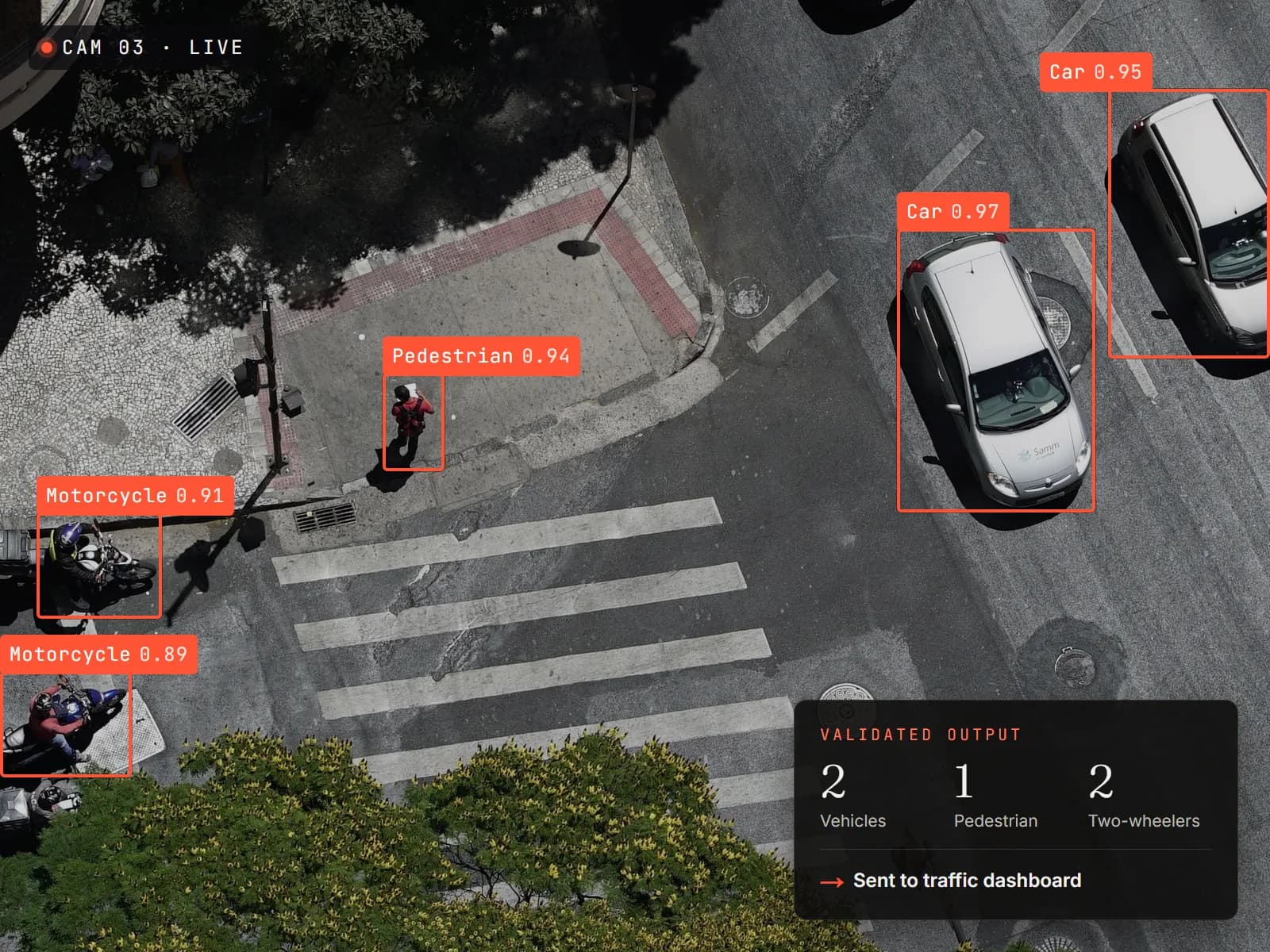
Computer vision services convert visual information into validated outputs that software and operational teams can use.
Computer vision development covers the full path from receiving an image, document, or video feed to identifying relevant information and sending the result into a defined business workflow.
The workflow begins with camera feeds, recorded video, images, or visual documents. The source, viewpoint, visibility, consistency, and operating environment shape what the system needs to interpret.
The system locates relevant objects, events, patterns, or information within the visual input. Depending on the problem, this may involve object detection, vehicle detection, OCR, video analytics, or visual inspection.
Detected information is classified or checked against criteria defined for the use case. Validation determines whether an output meets the acceptance requirements needed for the next action.
Validated outputs connect with the applications, interfaces, and workflows that consume them. This turns model output into usable information for the wider operation.
The workflow delivers an actionable result, such as an alert, dashboard update, review task, or audit record. The value comes from what your operation can do with the validated visual information.
Start with the operational problem and required action, then select the capability that can interpret the available visual input. This table connects common needs with suitable Computer Vision approaches and validation requirements.
| Business problem | Visual input | Suitable CV capability | Validation requirement | Operational outcome |
|---|---|---|---|---|
| Continuous visual monitoring is missing important objects or events | Live camera or video feed | Object detection and video analytics | Define which objects or events matter and how outputs should be validated | Send validated events into alerts, dashboards, or the relevant operational workflow |
| Vehicle and axle events need to be detected and validated automatically | Camera feed | Vehicle and axle detection and classification | Validate axle counts and axle-profile classifications | Support congestion alerts, enforcement alerts, and audit history |
| Information needs to be extracted from visual documents | Document images or scans | OCR | Validate extracted information against document and workflow requirements | Pass usable output into the relevant downstream workflow |
| Manual visual quality inspection is repetitive or inconsistent, including manufacturing quality checks | Images or video | Visual inspection | Define the visual criteria that determine whether an item needs action or review | Route the result into the appropriate quality-control or review workflow |
These patterns are starting points rather than interchangeable packages. A useful custom Computer Vision solution must be designed around the visual evidence available, the result that needs validation, and the system or person responsible for the next action.
Our custom computer vision development services cover each stage required to move from raw visual information to an operational result. The scope is shaped around your use case rather than a disconnected list of model capabilities.
We assess whether Computer Vision suits your business problem, review visual inputs and operating conditions, and define the workflow, validation requirements, and operational outcome.
Assess, organize, and prepare visual data to represent expected operating conditions, then structure it for model development, validation, and representative testing across the intended workflow.
Learn more about Data Preparation
Build and train detection and classification logic around the specific use case, available visual inputs, and the conditions in which the operational workflow will run.

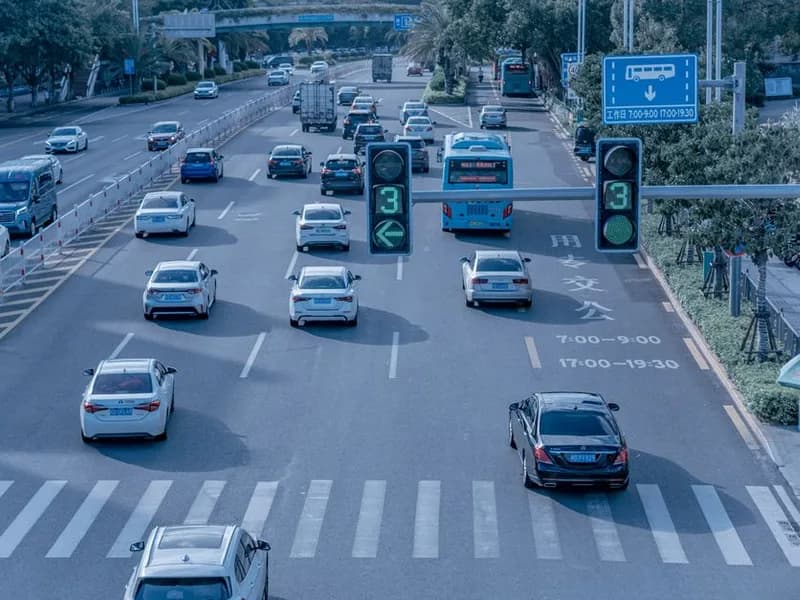
Identify defined objects and vehicles across image or video inputs, then produce structured outputs for classification, validation, and use within the wider operational workflow.
Extract information from visual documents, validate it against document and workflow requirements, and make usable data available to the relevant downstream software systems and applications.

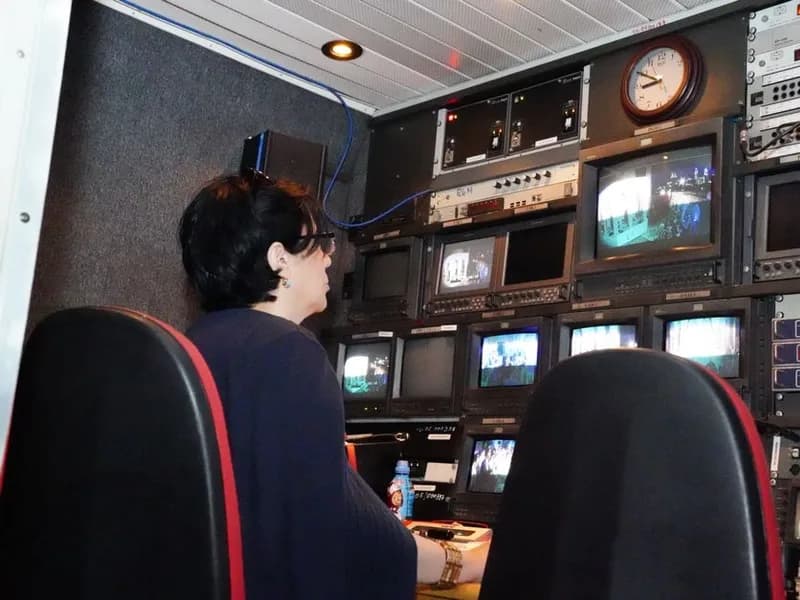
Use computer vision video analytics to interpret continuous visual feeds, identify relevant events, and send defined outputs to operational systems for alerts, dashboards, or review.
Assess images or video against defined criteria, helping determine whether an item should proceed, be flagged for attention, or move into a human review workflow.

Define acceptance criteria and test the Computer Vision workflow against representative inputs and operating conditions to confirm that outputs meet requirements established for operational use.
Refine the Computer Vision workflow against its visual conditions and operational requirements, then retest changes using representative inputs to confirm acceptable performance within the intended use case.
Connect validated outputs to applications, dashboards, alerts, and review workflows that consume them, then refine the deployment against defined operational requirements, expected actions, and responsibilities.
Computer Vision can support industry-specific visual workflows by interpreting images, video, camera feeds, and documents, then directing validated outputs into operational systems responsible for action. These are some of the industries where Computer Vision can be applied. The right approach is confirmed against the visual inputs and operational requirements of each engagement.
Analyze product imagery, monitor visual inventory workflows, and extract document information for catalog operations, order processing, and quality review tasks.
Extract information from scanned records and visual documents to support administrative workflows, document review, and structured processing.
Process scanned learning materials, extract text, and review visual content to support content organization, accessibility, and education administration workflows efficiently.
Extract information from property documents and images, support visual asset reviews, and route validated outputs into listing and management workflows.
Extract information from scanned financial documents, validate required fields, and route usable outputs into review, onboarding, and processing workflow systems.
Interpret camera and video feeds to detect vehicles, monitor operational events, and support alerts, dashboards, audit histories, and review workflows.
Use visual inspection and document extraction to support equipment reviews, field documentation, asset records, and downstream maintenance coordination workflow processes.
Apply computer vision for manufacturing to inspect products, detect defined visual conditions, and route results into quality-control and review workflows.
Tell us what your cameras capture today and what the workflow must deliver. We’ll assess whether your existing setup can support the required Computer Vision use case before development starts.
Our team takes your Computer Vision project from a defined use case to operational deployment, giving you a structured process aligned with your requirements and intended outcome at every stage.
We define the operational problem, required decision, intended action, and the people or systems that will use the output.
We review available images, video, camera feeds, or documents alongside the conditions that affect feasibility and representative testing.
We define the objects, events, patterns, or information the workflow must detect across its intended operating environment.
We establish classification rules and acceptance criteria that determine whether detected outputs are suitable for the required business use.
We combine the visual inputs, detection logic, classification, and validation stages, then test the workflow against agreed requirements.
We connect validated outputs with applications, dashboards, alerts, and review workflows based on confirmed interface and processing requirements.
We deploy the completed workflow, review its performance against project requirements, and refine it for the intended operation.
Choose a Computer Vision development company that connects Computer Vision capability with the engineering and integration needed to put visual outputs to work. Soft Suave approaches each engagement as a complete workflow rather than an isolated model.
We choose the right technology for your use case and workflow.
Capabilities span detection, OCR, video analytics, validation, and operational integration.
Experience delivering Computer Vision from visual input to operational action.
ISO/IEC 27001:2022 Certified processes support structured information security management throughout project delivery.
Delivery presence across Chennai, Bengaluru, and the United States supports global collaboration.
Support covers use-case assessment, model development, testing, integration, and deployment.
We work with proven technologies for model development, image and video processing, system integration, testing, and production deployment.
Explore how our AI solutions helped businesses automate workflows, reduce effort, improve decisions, and achieve measurable impact across industry projects.

Built a real-time Vision AI solution to detect vehicles, classify multiple lanes, and recognize floating axles, achieving 95%+ accuracy while improving congestion monitoring and toll inspection decisions across transportation networks.
Modernized a unified subscription commerce platform with scalable architecture, faster merchant onboarding, secure payments, enhanced subscriptions, and AI-assisted engineering, contributing to improved reliability, continuous innovation, and $10M+ ARR business growth.
Developed a centralized pet-care AI platform that unified health records, enabled early assessments and reminders, reduced manual record management by 90%, accelerated processing by 60%, and improved preventive care tracking by 50%.
Developed an AI-powered education platform with interactive assignments, personalized study tools, real-time feedback, teacher dashboards, role-based monitoring, and guest access, enhancing student engagement, writing, critical thinking, and classroom management efficiency.
We've empowered hundreds of clients globally to achieve their business goals. Hear firsthand how our expertise and AI-driven solutions have made a difference.
Find clear answers to common questions about Computer Vision development and implementation.
Computer Vision is appropriate when a workflow depends on interpreting repeatable visual inputs and the required result or action can be clearly defined and validated. Feasibility also depends on input quality and operating conditions.
The required data depends on the visual task and should represent the conditions in which the system will operate. This may include images, video, camera feeds, or visual documents with relevant real-world variations.
Achievable performance depends on the use case, input quality, operating conditions, and the validation criteria defined for the project. Representative testing is required because a universal accuracy figure cannot reflect every visual source, environment, and acceptance requirement.
Computer Vision development cost depends on the visual problem, available inputs, processing requirements, integration scope, and deployment complexity. Project pricing is confirmed after requirements and scope are reviewed for each engagement.
Computer Vision deployment depends on where visual inputs originate, how quickly results are required, and which systems must receive the output. The approach is defined around processing needs, interface availability, operating conditions, and the required downstream action.
Integration can be assessed when the available camera feeds and system interfaces can support the required Computer Vision workflow. Compatibility remains use-case specific; Soft Suave has case-specific edge-camera integration experience from a transportation implementation.
Computer Vision performance can be affected by the quality and consistency of visual inputs and by changing real-world operating conditions. Viewpoint, lighting, visibility, obstruction, environmental variation, and unclear validation criteria may limit what the workflow can interpret reliably.
Book a free AI strategy session with our experts and discover where AI can create the biggest impact in your organization.