
Data Science Consulting & Strategy
Define business questions, identify suitable use cases, assess data readiness, and create a practical roadmap for analysis, experimentation, or model development.



Turn business data into useful insights, validated models, and better-informed decisions. Soft Suave provides data science services covering strategy, exploratory analysis, statistical experimentation, model development, and evaluation based on your specific business problem and available data.
Define your business question, assess whether your data supports it, and choose the right analytical or modeling approach before implementation begins.




Start with your business question
Alert: This form is for business, not candidates. To apply for jobs, click here. to see open jobs at Soft Suave
We combine AI-enabled engineering with 14+ years of product development expertise to help clients build scalable AI solutions, automate complex workflows, and integrate systems for measurable business outcomes.



























Data science services help businesses use existing data to answer defined questions, test hypotheses, uncover patterns, and build or validate analytical models. The work can include data readiness assessment, exploratory analysis, statistical experimentation, model development, and evaluation, with machine learning used when it is appropriate for the problem.
Soft Suave approaches Data Science around the business question first. We assess the available data, identify what can reasonably be learned from it, and determine whether analysis, experimentation, statistical modeling, or machine learning is suitable.
Once the data and analytical approach are validated, the engagement can move toward the most suitable outcome. This may be a set of validated findings, a feasibility decision, an analytical model, or a foundation for a broader AI development initiative.

A business should use Data Science when existing data contains information that can help answer a defined question, test an assumption, identify meaningful patterns, or evaluate a model-based approach. It is especially useful when decisions require deeper analysis than standard reporting or when the feasibility of a data-driven solution needs validation. The table below will help you match the business problem to the right starting point.
| Business problem | Data available | Appropriate starting point | Related service if Data Science is not enough |
|---|---|---|---|
| Important patterns are difficult to identify | Historical operational, customer, product, or transaction data | Exploratory data analysis | Additional data-foundation work if data is fragmented or unreliable |
| A business assumption needs evidence | Relevant historical or experimental data | Statistical analysis and experimentation | Broader product or process work if the question cannot be answered from available data |
| Customers, products, or behaviors need to be grouped | Relevant customer, product, usage, or event data | Segmentation and pattern analysis | Additional data preparation when the information is incomplete |
| A model-based idea needs validation | Representative historical or labeled data | Model feasibility assessment or PoC | Broader AI implementation after the approach is validated |
| A decision needs stronger quantitative evidence | Structured business and operational data | Decision-support analysis or statistical modeling | Workflow or application development when the result must be operationalized |
The first step is not choosing an algorithm. It is determining whether the business question, available data, and required outcome fit together.
Our data science services cover the key stages from understanding a business problem and assessing available data to developing, validating, and supporting models in real-world environments.
Define business questions, identify suitable use cases, assess data readiness, and create a practical roadmap for analysis, experimentation, or model development.
Explore datasets to identify patterns, relationships, anomalies, missing information, and other characteristics that help determine what the available data can support.
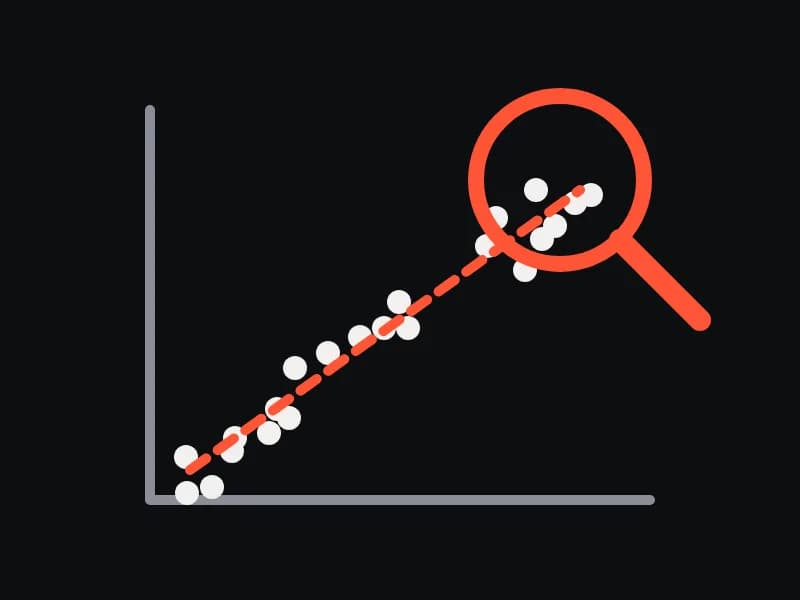
Apply statistical methods and structured experiments to test assumptions, evaluate relationships, compare outcomes, and provide stronger evidence for business decisions.
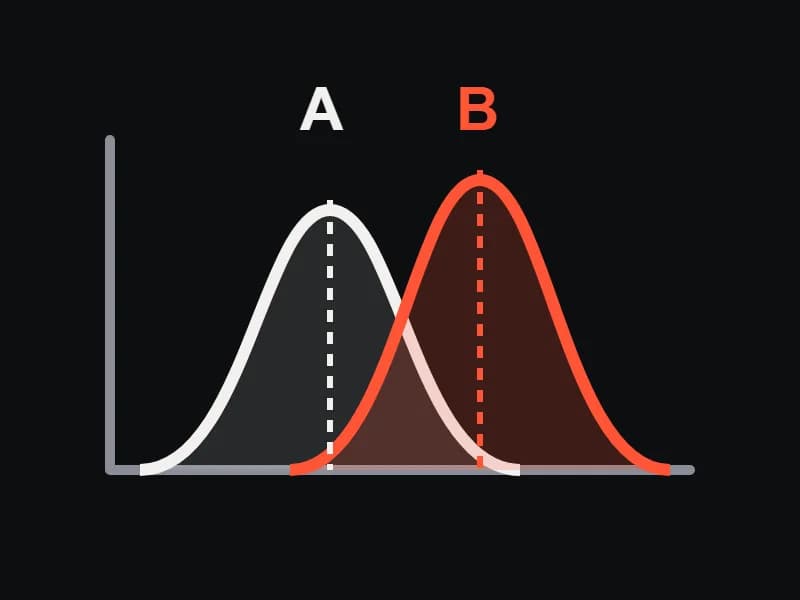
Develop statistical and machine learning models based on validated requirements, suitable datasets, and defined evaluation criteria for specific business or operational needs.
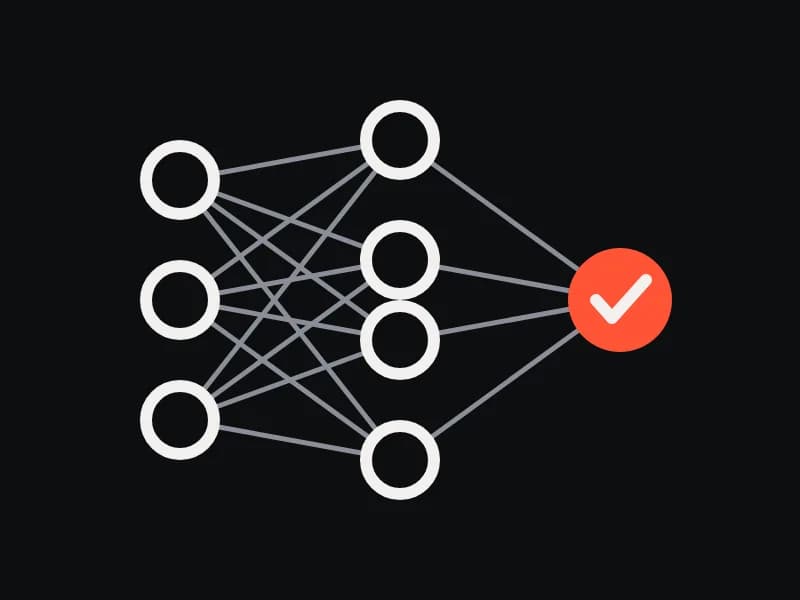
Compare and evaluate models using appropriate criteria and representative data to understand performance, limitations, trade-offs, and suitability for the intended use.
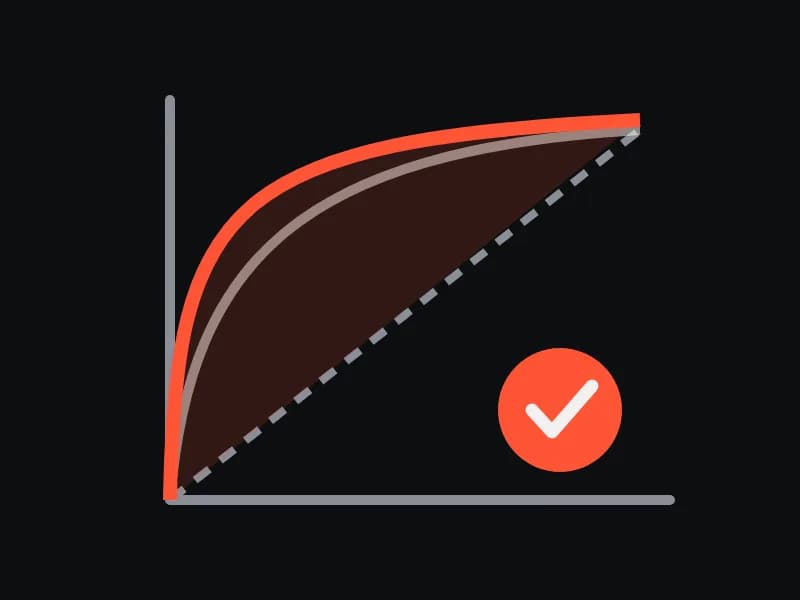
Support model deployment, versioning, monitoring, and lifecycle management so validated models can operate reliably within approved applications, systems, and production environments.
A structured Data Science process reduces the risk of building models before the business question, available data, and evaluation criteria are understood.
Clarify the decision, problem, assumption, or opportunity that needs investigation and establish what a useful result should help the business understand or decide.
Review the relevant datasets, sources, structure, completeness, consistency, limitations, and accessibility before deciding which analytical methods are appropriate.
Study the available data to identify distributions, relationships, missing information, unusual patterns, and other characteristics that influence later experimentation or modeling.
Test suitable statistical or machine learning approaches based on the problem, available evidence, and what was learned during exploratory analysis.
Compare outputs against agreed criteria and representative data to determine whether the analytical or modeling approach is suitable for the intended business use.
Prepare validated findings or model outputs for the agreed next step, which may include decision support, application integration, additional data work, or broader AI development.
Data Science applications vary by industry because the available data, operational context, business questions, and decision requirements differ.
Analyze transaction, customer, lending, product, or risk-related datasets to identify patterns and support evidence-based financial and operational decisions.
Explore health-related and operational datasets to identify meaningful patterns, evaluate analytical questions, and support suitable modeling initiatives around defined healthcare use cases.
Analyze learner activity, engagement, performance, and product data to uncover patterns that inform educational products and learning decisions.
Study customer, product, transaction, and behavioral data to understand user patterns and support merchandising, engagement, and commercial decision-making.
Analyze fleet, route, process, and operational information to identify patterns and support data-informed logistics planning and operational decisions.
Use customer, usage, network, and operational datasets to investigate patterns that can support service, network, and customer-related decisions.
Choosing a data science company requires more than comparing modeling technologies. The engagement should connect business questions, available data, analytical methods, validation requirements, information security, and the wider software environment in which the results may eventually be used.
Bring Data Science initiatives into an engineering environment shaped by 14+ years of delivery experience.
Access 400+ AI and engineering specialists to connect Data Science with applications, APIs, and systems.
Work with one team across discovery, analysis, experimentation, model development, validation, and planned implementation handoffs.
Protect sensitive business data through Soft Suave’s ISO/IEC 27001:2022 information security management certification during engagements.
Connect validated Data Science outputs with broader AI development, applications, APIs, and existing software environments.
Delivery presence across Chennai, Bengaluru, and the United States, supporting global project collaboration and coordination.
Explore how our AI solutions helped businesses automate workflows, reduce effort, improve decisions, and achieve measurable impact across industry projects.

Built a real-time Vision AI solution to detect vehicles, classify multiple lanes, and recognize floating axles, achieving 95%+ accuracy while improving congestion monitoring and toll inspection decisions across transportation networks.

Modernized a unified subscription commerce platform with scalable architecture, faster merchant onboarding, secure payments, enhanced subscriptions, and AI-assisted engineering, contributing to improved reliability, continuous innovation, and $10M+ ARR business growth.

Developed a centralized pet-care AI platform that unified health records, enabled early assessments and reminders, reduced manual record management by 90%, accelerated processing by 60%, and improved preventive care tracking by 50%.

Developed an AI-powered education platform with interactive assignments, personalized study tools, real-time feedback, teacher dashboards, role-based monitoring, and guest access, enhancing student engagement, writing, critical thinking, and classroom management efficiency.
Our technology stack supports data exploration, statistical analysis, experimentation, machine learning, model validation, and production model lifecycle management.
We've empowered hundreds of clients globally to achieve their business goals. Hear firsthand how our expertise and AI-driven solutions have made a difference.
Find answers about data science consulting services, development, project scope, costs, and more.
Data Science service costs depend on the business problem, available data, analysis required, model complexity, validation needs, integrations, and overall project scope. Project pricing is confirmed after the business requirements, available data, expected outcomes, technical environment, and scope are reviewed.
Yes. A Data Science PoC can help determine whether a proposed use case is technically and practically viable before a wider project begins. A useful PoC should define the business question, use representative data, establish evaluation criteria, and produce enough evidence to support a clear proceed, revise, or stop decision.
The duration of a Data Science project depends on data availability, data quality, the question being investigated, experimentation requirements, model complexity, validation needs, and integration scope. A feasibility assessment or focused analysis will usually require a different level of work from a project that includes model development and application integration.
Yes, but fragmented data should be assessed before deeper analysis or model development begins. The initial Data Science work can identify whether the available information is usable, which limitations affect the intended question, and whether additional preparation or data-foundation work is required before meaningful experimentation or modeling can continue.
After validation, the next step depends on how the model will be used. A validated model may support internal analysis, be prepared for an application or API workflow, require additional testing with broader data, or become part of a wider AI implementation based on the project’s agreed business and technical requirements.
A Data Science project needs data that is relevant to the business question and sufficiently representative of the situation being studied. The data does not need to be perfect at the start, but its availability, structure, completeness, consistency, and limitations should be assessed before selecting an analytical or modeling approach.
Hiring a data science consultant can be useful when a business needs specialized analysis, independent feasibility assessment, or additional capability without first building a permanent internal team. An in-house team may be more suitable when Data Science is a continuous core function requiring long-term ownership, repeated experimentation, and ongoing domain knowledge.
Book a free AI strategy session with our experts and discover where AI can create the biggest impact in your organization.