
Custom RAG Development
Build custom RAG systems around your knowledge sources, application requirements, query patterns, and users, with retrieval architecture designed for the information your AI application needs to access.



Build custom RAG systems that connect your business documents, knowledge bases, and approved data sources with large language models. Soft Suave combines retrieval engineering with Document AI because the way documents are extracted, structured, and chunked directly affects what a RAG system can retrieve.
Turn scattered business knowledge into AI answers grounded in information retrieved from the original source.




Discuss your RAG project
Alert: This form is for business, not candidates. To apply for jobs, click here. to see open jobs at Soft Suave
We combine AI-enabled engineering with 14+ years of product development expertise to help clients build scalable AI solutions, automate complex workflows, and integrate systems for measurable business outcomes.



























RAG gives large language models access to your business knowledge when a question is asked, while Document AI prepares complex documents so that information can be searched, retrieved, and used more reliably.
Retrieval-Augmented Generation (RAG) is an AI approach that retrieves relevant information from an external knowledge source before a large language model generates its response. This lets the model answer using your business-specific or current information, producing responses grounded in approved company data rather than training data alone. In practice, those sources can include policies, manuals, reports, product documentation, support content, and internal knowledge bases.
Document AI works earlier in the pipeline by preparing content from complex source files for retrieval: scanned PDFs, multi-column reports, contracts, forms, and files with tables or nested structure. It can help extract usable information, preserve meaningful structure, and organize content into retrieval-ready chunks. Metadata, layout, and document structure also influence what the system can find later.
Together, the two capabilities create a connected workflow. Document AI prepares the source material, RAG retrieves the relevant evidence, and the LLM uses that evidence to produce a response grounded in the source. These stages are interdependent, so document preparation and retrieval need to be designed together rather than handled as separate technical tasks.
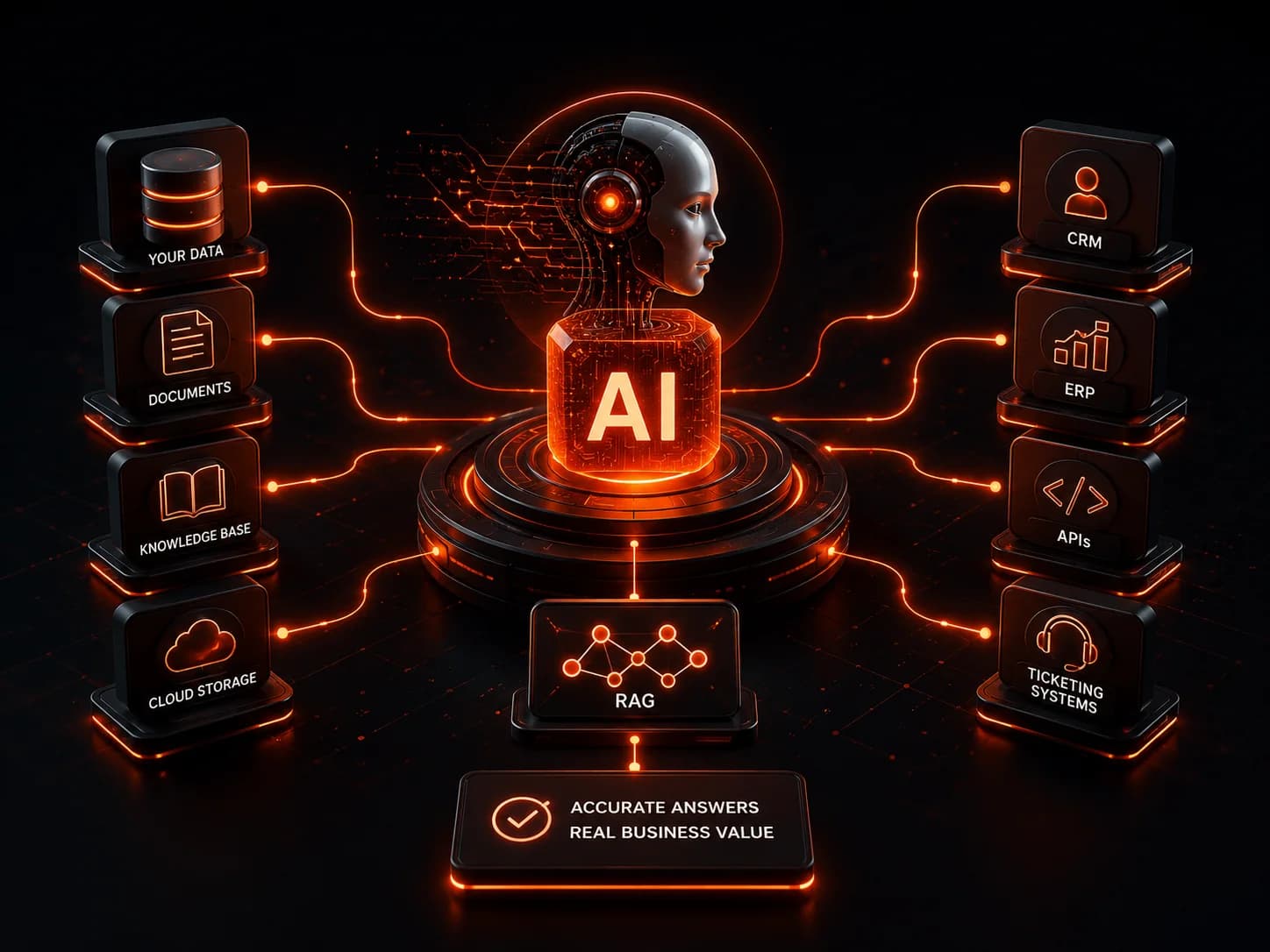
Build retrieval and document intelligence workflows around your business data, applications, and users. We help turn your documents and enterprise knowledge into AI-ready information that can be searched, retrieved, and used to deliver more relevant responses across business applications.
Build custom RAG systems around your knowledge sources, application requirements, query patterns, and users, with retrieval architecture designed for the information your AI application needs to access.
Build enterprise RAG solutions that retrieve relevant information across approved knowledge sources, with retrieval configured around source type, query patterns, metadata, chunking strategy, and ranking approach rather than applying one generic setup everywhere.

Integrate retrieval capabilities into AI assistants, internal applications, enterprise search, and support workflows, passing relevant context to the LLM within existing application flows to enable more reliable company-specific responses.
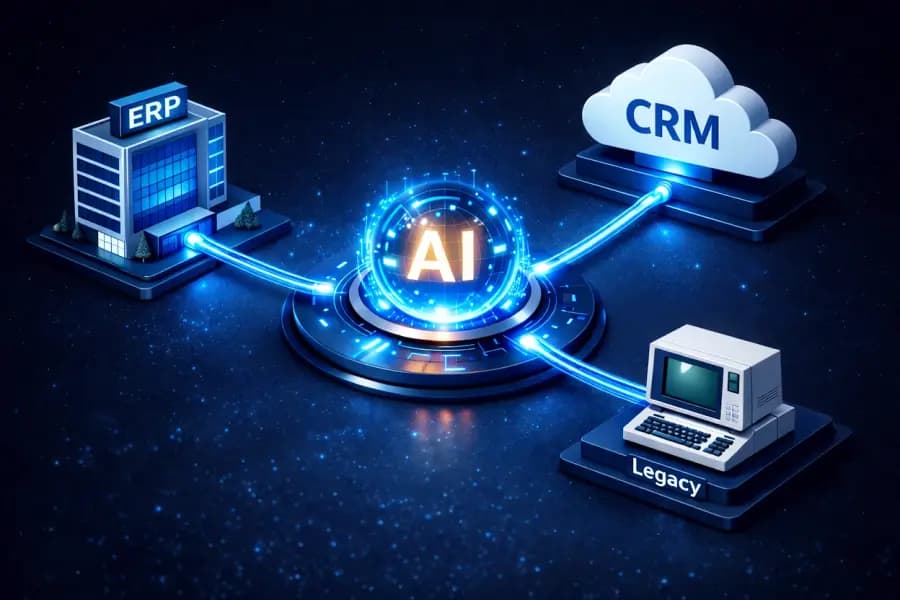
Turn business documents into usable knowledge for downstream AI workflows. Document AI parses structure, preserves layout, and organizes content into retrieval-ready chunks before it enters search, retrieval, or LLM applications.

Make large document collections easier to work with by retrieving relevant content and using AI-assisted summarization where appropriate, helping users review important information without searching every file manually.

Test whether retrieval returns relevant source material and whether generated responses remain supported by that context. Evaluation should examine real queries, retrieval failures, source quality, and changes in the knowledge base.
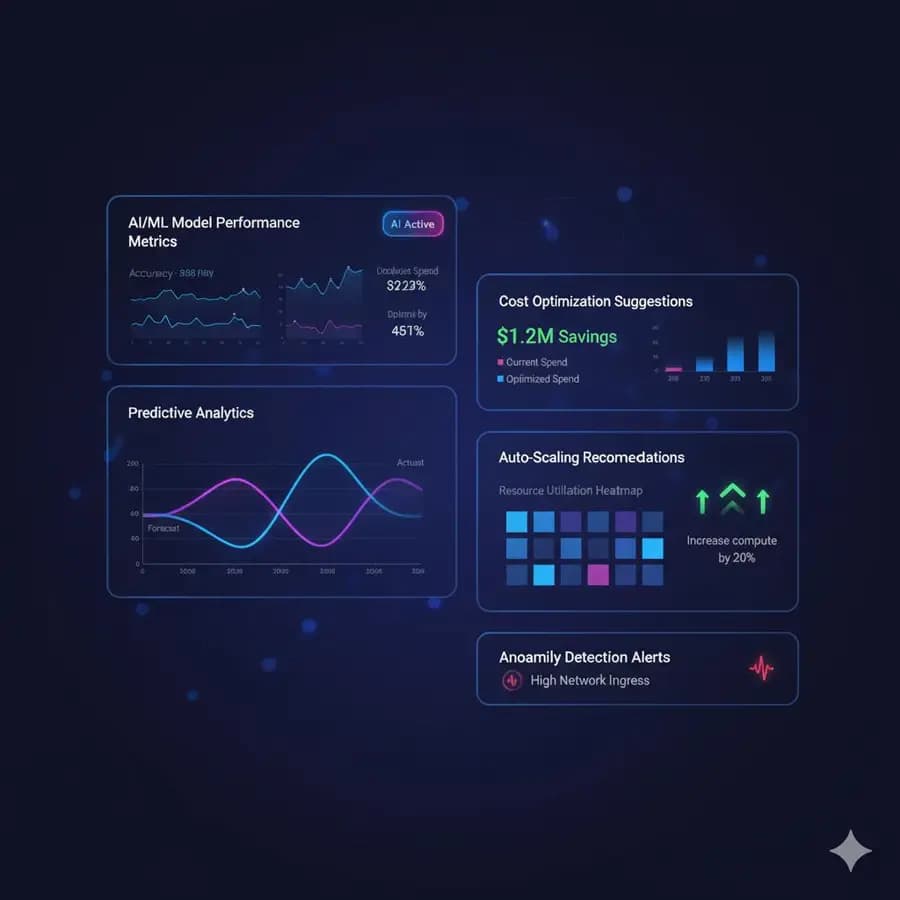
Design retrieval around document permissions and user access requirements so confidential information is not treated as universally available when RAG applications search across enterprise knowledge sources.

RAG and Document AI fit best where answers already exist in company material but take too long to find, especially across large document sets, recurring queries, and frequently changing information.
Help employees and operations teams find policies, procedures, product details, and operational guidance across approved company sources without manually searching multiple repositories, folders, or documents for answers.
Give support, HR, and internal operations teams AI assistants that retrieve approved company knowledge during everyday workflows, helping users access specific guidance without relying only on general model knowledge.
Let legal, compliance, and technical teams ask natural-language questions across connected documents, such as policy exceptions, contract clauses, or specification details, and receive answers from retrieved source passages.
Help operations and compliance teams process scanned files, contracts, forms, and reports by extracting usable content and preserving structure before that information enters search, retrieval, or downstream RAG workflows.
Help legal teams, analysts, and technical teams review large document collections by retrieving relevant passages and summarizing key material, so repeated research starts from the information that matters most.
Transform documents, knowledge bases, and internal data into searchable, AI-ready knowledge with a RAG and Document AI solution designed around your application and business requirements.
RAG gives an LLM access to external knowledge when it answers, while fine-tuning changes how the model responds through additional training. The right choice depends on whether you need knowledge retrieval, model adaptation, or both.
| Decision Factor | RAG | Fine-Tuning |
|---|---|---|
| Knowledge that changes frequently | Strong fit | Weak fit |
| Showing source evidence for answers | Yes | No |
| Adding new information | Update the source without retraining | Requires additional training |
| Adapting tone, format, or task behavior | Limited | Strong fit |
| Grounding answers in company data | Strong fit | No |
| Keeping knowledge externally retrievable | Strong fit | Weak fit |
Fine-tuning is often the better choice when the requirement is consistent behavior, style, format, or task performance. RAG suits knowledge that changes or needs to remain externally retrievable and verifiable.
Many production systems use both: fine-tuning shapes how the model responds, while RAG controls the external knowledge available to it at response time.
Apply RAG and Document AI across industries where teams rely on large volumes of documents, technical information, and frequently changing business data that must be searched and used efficiently.
Connect product catalogs, supplier agreements, returns policies, warranty information, and support content to AI applications that help customers and support teams find accurate information faster.
Support retrieval across clinical documentation, care information, policies, and research materials while keeping access aligned with record-handling and permission requirements.
Make course content, learning materials, institutional policies, and academic documentation easier for students, educators, and administrators to search and reference.
Organize property documents, lease agreements, valuation reports, market information, and policy documents so teams can retrieve relevant details across property reviews and transactions.
Work with policies, compliance documentation, financial reports, and operational procedures that teams need to search, review, and reference accurately.
Improve access to shipment records, fleet documentation, operating procedures, customs information, and service policies for teams handling distributed documents and time-sensitive requests.
Connect technical documentation, service information, network records, support content, and operating procedures to AI-powered search for service and engineering teams.
Make technical manuals, SOPs, specifications, maintenance records, quality documentation, and production guidelines easier for engineering and production teams to search and reference.
Work with a RAG development company that brings RAG, Document AI, application development, and enterprise integration into one engineering team, so retrieval, document processing, and the surrounding application are designed to work together.
Combine RAG and Document AI expertise to design retrieval systems around complex enterprise documents and knowledge.
14+ years of engineering experience, with capabilities across AI, full-stack applications, cloud platforms, APIs, and integrations.
400+ AI and engineering specialists support architecture, development, integration, testing, and production delivery across complex projects.
Evaluate retrieval using real queries, source relevance, grounding, and failure cases before moving RAG systems into production.
Connect retrieval with applications, APIs, and data sources through one engineering team, reducing handoffs across delivery.
Build permission requirements into retrieval design early, so confidential documents remain restricted according to existing access rules.
Explore how our AI solutions helped businesses automate workflows, reduce effort, improve decisions, and achieve measurable impact across industry projects.

Built a real-time Vision AI solution to detect vehicles, classify multiple lanes, and recognize floating axles, achieving 95%+ accuracy while improving congestion monitoring and toll inspection decisions across transportation networks.

Modernized a unified subscription commerce platform with scalable architecture, faster merchant onboarding, secure payments, enhanced subscriptions, and AI-assisted engineering, contributing to improved reliability, continuous innovation, and $10M+ ARR business growth.

Developed a centralized pet-care AI platform that unified health records, enabled early assessments and reminders, reduced manual record management by 90%, accelerated processing by 60%, and improved preventive care tracking by 50%.

Developed an AI-powered education platform with interactive assignments, personalized study tools, real-time feedback, teacher dashboards, role-based monitoring, and guest access, enhancing student engagement, writing, critical thinking, and classroom management efficiency.
Build RAG and Document AI systems using technologies across language models, vector search, document processing, orchestration, evaluation, and cloud deployment.
We've empowered hundreds of clients globally to achieve their business goals. Hear firsthand how our expertise and AI-driven solutions have made a difference.
Get clear answers to common questions about RAG and Document AI before planning your solution.
Start with the knowledge sources the system needs to use, the questions users are expected to ask, and who should have access to each source. Data quality, document structure, integrations, permissions, and expected outputs should be reviewed before the retrieval architecture is finalized.
RAG implementation costs vary based on the number and condition of your data sources, document complexity, integrations, access requirements, evaluation needs, and deployment scope. Reviewing these requirements with our experts first helps define a realistic project scope and cost range.
The timeline depends on data readiness, source complexity, integrations, access controls, evaluation requirements, and the level of production setup involved. Starting with our expert assessment helps identify potential delays early and establish a more realistic delivery plan.
No. RAG can reduce unsupported responses by grounding the model in retrieved information, but it does not eliminate hallucinations completely. Retrieval quality, source quality, model behavior, prompting, and evaluation still influence whether the final response is accurate, relevant, and supported by available evidence.
Yes, when the document content can first be converted into usable information for retrieval. Document AI can help extract and organize content from complex files before it is indexed, allowing the RAG pipeline to search and retrieve information more effectively.
Evaluate retrieval and generation separately. Check whether the system finds relevant source material, whether that evidence supports the answer, whether the response addresses the question, and which queries consistently produce weak, missing, or conflicting results.
Confidential information should be filtered according to each user’s permitted access before retrieved content reaches the model. The access design depends on existing identity systems, repositories, document permissions, and security requirements already used within the organization.
Book a free AI strategy session with our experts and discover where AI can create the biggest impact in your organization.